
Your Custom Text Here

A Scenic Dartmoor Road Trip
This scenic drive across Dartmoor takes in a Bronze Age village, ancient woodland, cosy pub, pretty hamlet and epic viewpoint.
A Scenic Dartmoor Road Trip — Starting and Ending at Moorland View Cottage

Moorland View: The Perfect Starting Point
Set in the heart of Dartmoor National Park, North Bovey is one of Dartmoor’s prettiest and most unspoilt villages — and home to Moorland View Cottage. With no streetlights and barely any traffic, it’s a calm, restorative place to begin and end each day.
Enjoy a slow farmhouse breakfast back at the cottage, then set off knowing every stop on today’s route sits comfortably within reach.
1. Explore a Bronze Age Village at Grimspound
Your first stop is Grimspound, one of Dartmoor’s most atmospheric ancient sites. Dating back to around 1300 BC, this stone-walled settlement contains 24 Bronze Age hut circles enclosed by a granite perimeter wall.
Its haunting setting famously inspired Conan Doyle and appears in The Hound of the Baskervilles. Free to visit and open year-round, Grimspound is a powerful introduction to Dartmoor’s ancient landscape.
2. Visit an Ancient Oak Forest at Wistman’s Wood
Continue towards Two Bridges to visit Wistman's Wood, a rare remnant of Dartmoor’s original oak forest. Twisted dwarf oaks, thick with moss and lichen, rise from a boulder-strewn floor, creating a scene that feels almost mythical.
The gentle one-hour return walk is achievable for most visitors. Afterwards, pause for lunch or a cream tea nearby before continuing the loop.
3. Discover Dartmoor’s Dramatic Past at Princetown
In the centre of the moor lies Princetown, home to the formidable Dartmoor Prison Museum. Once housing some of Britain’s most notorious offenders, the museum offers a fascinating and unsettling insight into the prison’s past.
If the museum feels a little intense, Princetown itself is still worth a short wander, with its stark setting and sweeping moorland backdrop.
4. Stretch Your Legs Where the Rivers Meet at Dartmeet
Stretch your legs at Dartmeet, where the East and West Dart rivers meet beneath an 18th-century stone bridge. In warmer months, the shallow water is ideal for paddling; at any time of year, it’s one of the most scenic stopping points on the moor.
5. Wander One of Dartmoor’s Prettiest Villages: Buckland-in-the-Moor
Next, visit the tiny hamlet of Buckland-in-the-Moor, one of Devon’s most irresistibly pretty villages. Wander among its thatched cottages, step inside the ancient church, and walk above the village to find the Ten Commandments carved into exposed rock.
6. Browse Independent Shops and Delis in Ashburton
Known as the gateway to the moor, Ashburton is an elegant town whose prosperity was founded on cloth and tin. Today it’s a pleasure to explore, with antique shops, delis, cafés and well-regarded restaurants lining its slate-hung streets.
Ashburton is also the most convenient fuel stop on this route before heading back onto the open moor.
7. Visit the Iconic Moorland Village of Widecombe-in-the-Moor
One of Dartmoor’s most beautiful villages, Widecombe-in-the-Moor is a highlight of the drive. Its church, St Pancras, is crowned by a towering spire often called the Cathedral of the Moor. Inside, boards recount the dramatic storm of 1638, when lightning struck during a service and the Devil was blamed.
Pause for lunch at the Rugglestone Inn, with open fires and flagstone floors, or browse the National Trust shop in the square, known for woollen blankets and locally made homewares.
8. Walk to Breathtaking Views at Hound Tor
Before heading home, stop at Hound Tor, one of Dartmoor’s most accessible viewpoints. A short walk leads to sweeping views across the moor, with the remains of a medieval village lying just below the tor.
9. Return to Moorland View Cottage
As the light softens over the hills, return to Moorland View Cottage. Light the fire, sink into a deep bath, or wander down to The Ring of Bells for dinner and a drink.
This is the pleasure of staying somewhere perfectly placed: no long drives at the end of the day, just the feeling of having explored Dartmoor at its best — then coming back to somewhere quietly special.
Book Your Stay at Moorland View Cottage
Experience Dartmoor like this: unhurried, beautifully circular, and centred on one exceptional place to come home to.
AT A GLANCE
Starting point: North Bovey (from Moorland View)
Typical duration: Half day to full day (flexible)
Best for: Scenic driving, gentle walks, photography, first-time Dartmoor visitors
Best seasons: Spring to autumn (clear winter days can be stunning too)
This scenic drive is just one of many carefully curated Dartmoor experiences we share with our guests. When you stay at Moorland View Cottage, you’ll also receive:
Quiet road suggestions most visitors miss
Best timings to avoid crowds
Seasonal food and pub recommendations
Walks matched to weather and energy levels
The best Dartmoor experiences aren’t in the guidebooks — they’re shared here!
ROUTE
North Bovey → Grimspound → Wistman’s Wood → Princetown → Dartmeet → Buckland-in-the-Moor → Ashburton → Widecombe-in-the-Moor → Hound Tor → North Bovey

Dartmeet
-
Starting in North Bovey means you’re immediately on some of Dartmoor’s quietest, most beautiful roads. There’s no need to cross busy sections of the moor first, and you avoid doubling back later in the day.
Guests staying at Moorland View benefit from a natural circular route, shorter driving distances and the flexibility to dip in and out of stops depending on the weather. It’s an ideal “slow travel” Dartmoor experience — especially for a romantic break.
Many guests tell us this is their favourite day of their stay.
-
There is one main road that runs across the centre of Dartmoor, with cuntless narrow, country lanes leading off it.
Drive slowly and carefully. Sheep, ponies and cattle often wander onto Dartmoor roads, and many are injured or killed each year by speeding vehicles.
On narrow lanes, the driver closest to a passing place usually reverses. If you’re not confident, it’s fine to wait — and always offer a friendly wave of thanks.
Book your stay at Moorland View Cottage to experience Dartmoor like this: unhurried, beautifully circular, and centred on one exceptional place to come home to.
-
Petrol stations are few and far between on the moor. The most reliable fuel stop on this route is in Ashburton.
-
One of the most reliable and relaxed lunch stops on this route is in Widecombe-in-the-Moor. The village has a small selection of welcoming cafés clustered around the green, making it easy to park nearby and enjoy an unhurried break.
Widecombe is especially good for light lunches, homemade cakes and coffee, and it’s a natural pause point before heading back across the moor. On quieter days, it’s a lovely spot to linger and soak up the village atmosphere before continuing the drive.
We share timing tips with Moorland View guests to help you arrive before the busiest periods.
-
Late spring through early autumn offers the best balance of long daylight hours and road conditions. Clear winter days can be magical, but always check weather and visibility before heading out.
We provide seasonal advice to guests on arrival.
-
Grimspound is one of Dartmoor’s most atmospheric prehistoric settlements — a Bronze Age village set high on the open moor. Stone hut circles sit within a protective wall, with sweeping views across the landscape.
It’s a short, gentle walk from the parking area and an excellent early stop to stretch your legs. On quiet days, it feels wonderfully remote and timeless.
-
Wistman’s Wood is an ancient, moss-draped oak woodland that feels almost mythical. The walk is uneven and rocky but relatively short, making it accessible for most reasonably fit visitors wearing sturdy shoes.
Mist, low light and twisted trees make this one of Dartmoor’s most photographed places — especially atmospheric in cooler months.

Grimspound

Wistman’s Wood

Ashburton

Widecombe in the Moor

Dartmoor's Top 10 Walks
A guide to Dartmoor National Park’s best walks, including pub walks, and walks through woods, moors and tors.

TOP 10 WALKS IN DARTMOOR NATIONAL PARK, DEVON
Ancient woodlands, leafy riversides and open moors littered with the leavings of Bronze Age man - here are the best 10 walks in Dartmoor National Park, Devon
1. Fingle Gorge
One of Dartmoor's most spectacular riverside walks, this two-hour round-trip follows a forested gorge from fairytale Castle Drogo to the traditional Fingle Bridge Inn, overlooking the river. In spring, the woodlands here are carpeted with bluebells and daffodils.
2. Wistmans’ Wood
A vestige of the prehistoric dwarf oak trees that used to cover Dartmoor, Wistman's Wood (pictured above) has occupied this lonely spot near Two Bridges for 6,000 years. The gnarly ancient oak trees rise from mossy boulders, and have branches festooned in ferns and lichen. The Two Bridges hotel is a traditional spot for a drink afterwards, but for a meal or a cream tea, or to avoid the coach parties, head to Princehall Hotel, a beautiful Georgian Manor House nearby with stunning views.
3. Easdon Tor
For a heady shot of invigorating country air and instant perspective on your surroundings, Easdon Tor, a rock-topped hill which is a 10-minute walk from Moorland View. At the top, there are 360-degree views of Dartmoor, wild horses and birds of prey.

Fingle Gorge
4. Grimspound
One of the most complete examples of the moor’s prehistoric settlements, Grimspound is a stone enclosure littered with the leavings of 24 Bronze Age roundhouses. The eerie setting inspired Sherlock Holmes' classic, the Hound of the Baskervilles.
5. North Bovey to Lustleigh
Strike out on this beautiful two-hour hike, taking in gorgeous views, a Roman fort and the magical woodland glen of Lustleigh Cleave, with its two-story high boulders. A thatched pub, The Cleave, awaits you at the end, with cream teas, delicious meals and real ales.
6. River Bovey
This flat, easy 20 minute walk from Moorland View to Bovey Castle traces the crystal-clear River Bovey, through wildflower woodlands and across stone bridges. Bovey Castle’s 250-acre estate has rose gardens, elegant lakes and well-kept lawns.

Wiseman’s Wood
7. Hound Tor
The jumble of boulders that make up Hound Tor provides one of the most easily accessible and expansive viewpoints in Dartmoor. You'll see the rocky peaks of several other tors here and views of moorland villages, and just southeast of the tor are the remains of a medieval village.
8. Brent Tor
There are few places as romantic as the top of craggy Brent Tor, where the tiny parish church of The Church of St Michel de Rupe sits pretty and gives way to spectacular views. Surrounding the tor are Iron Age earthworks and the remnants of a hill fort.
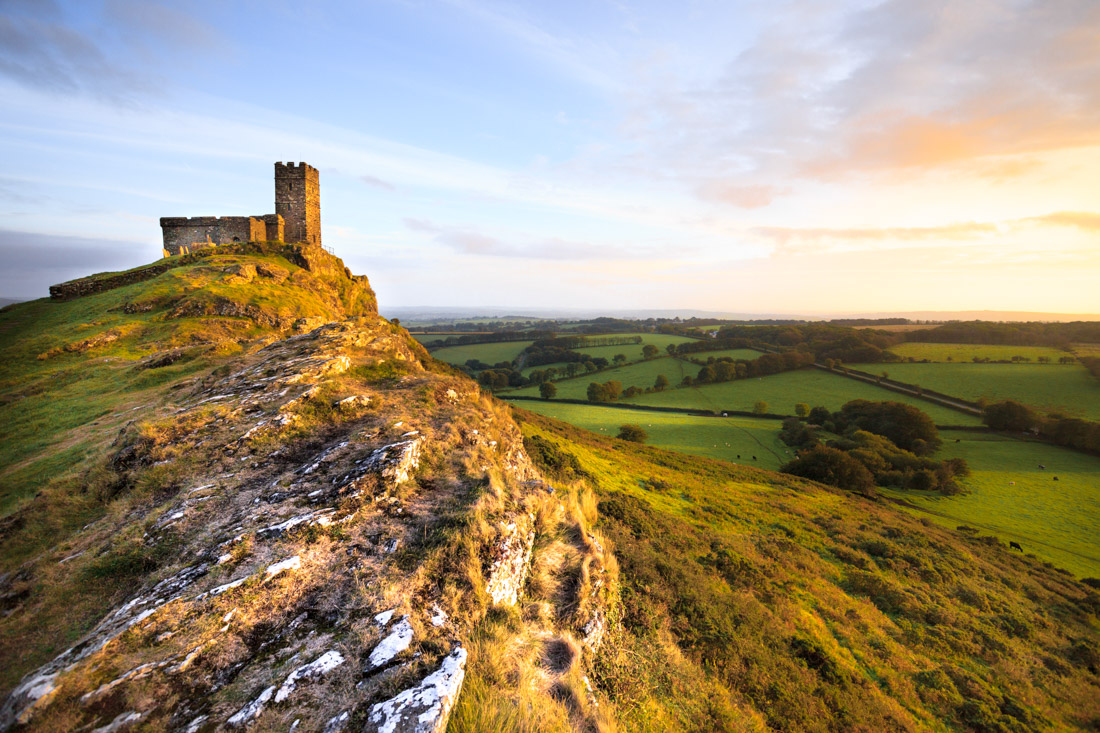
Brent Tor
9. Lydford Gorge
Fern-fringed paths wind through the deepest gorge in the southwest, with sites along the way including the 30-metre Whitelady Waterfall and the swirling Devil’s Cauldron whirlpool. The caves and gullies of this wild place were a hangout for sheep-stealing bandits in the 17th century.
10. Lustleigh Cleave
From the tiny village of Lustleigh you can make a wonderful circular walk (5 miles) past trees, tors and tumbled boulders through this deep cleft on the Sticklepath Fault. Reward yourself with a drink under the oak beams of the 15th-century Cleave Hotel.

Devon's Best Swimming Spots
Cool off with a refreshing summer swim in one of Devon’s finest swimming destinations.

Bovey Castle
If you’d rather not expose yourself to the elements, Bovey Castle has a beautiful Art Deco indoor pool with far-reaching views of the estate and Dartmoor beyond. In summer, there are sun loungers on the sunny terrace.
Moretonhampstead Swimming Pool
Don’t be put off by its location behind the town’s car park. Behind the walls of Moreton Pool is a peaceful 25m, community-run outdoor pool that’s the perfect place for cooling off on summer days. Heated by air source heat pumps and solar power, you can swim comfortably even when the sun is hiding behind the clouds. There’s a small grassy area for sunbathing. Leave before 3pm on sunny days if you want to avoid hordes of schoolchildren.
Chagford Swimming Pool
Just a ten-minute drive from North Bovey, Chagford Pool can't be far from heaven. Swallows nest in the changing rooms and dive-bomb the swimmers, and with the sound of the river Teign running past stepping stones, it's as relaxed as a swimming pool gets. Its river fed and heated with air source heat pumps that are supplemented by solar panels, so is a balmy 26c.
The Dart at Spitchwick
The leafy setting, the clean water (that brown colour is healthy peat) and the sheer fun of Spitchwick justifies its popularity. There’s a gorgeous swimming and picnic spot with a high corner pool, a deep, tranquil lower corner pool for serious swimmers; and a cliff for daredevil jumpers. It can get busy on a hot day as families gather to picnic on the common, and parking can be a problem - get there early for a space, or walk the half-mile from the car park at New Bridge. Peaty water, clean from the mountain, this is the most popular and accessible Dart swimming location, especially in summer. Also known as Deeper Marsh, it has been a bathing place for generations. Grassy flats lead to rocky river shore, deeper on far side with high cliff behind.
Salmon Leap, Fingle Gorge
This deep pool in Fingle Gorge is bliss in summer. The Teign cascades into three Victorian square stone plunge pools, each about 1m deep and smooth-lined, so great for a pummelling massage! Park by the humpback bridge just after Mill End hotel and walk up to the Iron Bridge, where there’s a beach area and rocks for picnicking on.
Blackpool Sands
You’re spoilt for choice for places to swim on Devon’s south coast, but our favourite is Blackpool Sands for its beautiful position, fantastic beach cafe, safe currents and summer-round lifeguards.
RELATED ARTICLES


Devon's Best Public Gardens
Take your pick of our favourite gardens in Devon, including gardens in castles, abbeys and Elizabethan mansions.
Gardens in abbeys, castles and Elizabethan mansions - Devon has some of the UK’s best gardens. Take your pick from our favourites.

RHS Rosemoor
Set within wonderful woodlands, RHS Rosemoor is a highly ornamental garden with shrubs, roses, perennials and bulbs. Originally created by Lady Anne Berry, the gardens still have original features including the woodland garden and woodland banks, as well as a huge variety of ornamental woodland trees and shrubs including Collingwood Ingram cherry introductions. There is also the beautiful Queen Mother Rose Garden containing a marvellous collection of hybrid tea and floribunda roses, and a maze of pathways which gradually leads to the side of the valley with views overlooking Rosemoor House.
Stone Lane Garden and Sculpture Exhibition
Stone Lane Garden is an enchanting five acre woodland and water garden on the edge of Dartmoor. Famous for a national collection of birch and alder trees, the garden also features many pools and streams, and is home to a collection of garden sculptures which remain from the 2014 Mythic Garden Sculpture Exhibition which marked the garden’s 22nd year. With something to be found in every corner of the garden, Stone Lane is open all year round and is equally magical and unique in both summer and winter.
Powderham Castle
Powderham Castle’s gardens (pictured) are on a south-facing slope with a glasshouse built by the architect Charles Fowler, which now provides a wet weather shelter for visitors and is used by the estate to supply plants to the Plant Centre at Powderham Country Store just within the castle gates. Originally the Victorian walled garden, it’s now home to the many friendly Powderham pets and an adventure play and picnic area, making this a great garden for the whole family.
Elizabethan Gardens
These Elizabethan Gardens sit in a 16th Century Street in Plymouth’s Historic Barbican where wealthy merchants once built their houses. Providing an oasis of tranquillity amidst a sea of shoppers and tourist activity the garden features very low box hedges containing beds of colourful flowers and fragrant herbs in the traditional, old Elizabethan manner. Visitors to the gardens will walk the cobbled paths and areas of old slate before relaxing on stone seats beside the cooling garden fountain – the perfect way to reflect and embark on a journey back in time to Elizabethan Plymouth.
Torre Abbey Gardens
The Torre Abbey Gardens feature a range of marvellous plants, trees and church ruins, and include a novel display inspired by the works of local writer Agatha Christie. The Abbey has dug deep into the murky world of poisons, antidotes and remedies from Christie’s novels to create a garden featuring a variety of plants that have been known to cure or kill (depending on one’s motives). Of course, the garden is not really dangerous and has been designed to provide entertainment with less potent garden cultivars planted but creating an interesting take on a traditional garden. The garden also features one of the Westcountry’s finest Dahlia collections and there is a new medieval children garden which focuses on the senses with turf seats, willow tunnels and sensory planting.
Dartington Hall Grade II Listed Gardens
At the heart of a 1200 acre estate sits the Dartington Hall grade II listed gardens. Seasonal garden highlights include tree magnolias, camellias, cherry blossom and snake’s head fritillaries in the woodland walks in Spring. From late May to early June the wildflower meadows’ wild orchids, bluebells and primroses burst into colour, then in summer the sunny border is the star, with plants and flowers in blue, yellow, white and green. During autumn the leaf colour is at its most spectacular, in the maples of High Meadow and Valley Field, and in winter the witch hazels near Flora bloom. The gardens also feature a 1500 year old yew tree and a famous sculpture by Henry Moore.
Northernhay Gardens
Northernhay Gardens in the heart of Exeter city centre are of outstanding historic significance. Incorporating a good stretch of Roman wall and the only length of Saxon town wall to be seen in England, this is the oldest public open space in England, being originally laid out in 1612 as a pleasure walk for Exeter residents. The garden is home to a number of mature trees and hosts some of the city’s most impressive seasonal horticultural displays, including the 59 varieties within the Cornus collection, and wildlife including peregrines and sparrowhawks have recently been spotted making the gardens their home. Neighbouring Rougemont Gardens also incorporate some major historic features – the Roman city wall and bank, the gatehouse, bank and ditches of William the Conqueror’s Castle.
Tiverton Castle
The beautiful walled gardens of Tiverton Castle feature rare and interesting plants, colourful spring bulb borders, a pergola planted with rapid growing and scented climbing plants, a well-stocked kitchen garden, apple orchard and woodland garden, all situated in the romantic grounds of the atmospheric Tiverton Castle, originally built in 1106. The gardens cover some three acres and include pathways leading towards the River Exe.
The Garden House
Set in the ruins of a 16th century vicarage, the Acer glade at The Garden House is one of the best spots in the UK to see Autumn colour.
Open gardens
Every spring, Devon locals open their private gardens to the public. Visit NGS for more information.

Dartmoor's Best Photo Locations
Landscape photographer and social media sensation Will Lamerton reveals Dartmoor’s most Instagrammable destinations.

Leather Tor
The 10 Best Dartmoor Locations For Epic Landscape Photos
Dartmoor landscape photographer and social media sensation Will Lamerton is an expert on Dartmoor’s most Instagrammable destinations. Here, he reveals his favourite places on Dartmoor to take photographs.
Dartmoor - it has a fantastic diversity of landscapes, wildlife and rich history. With jagged rocky tors, forests, lakes and big views, this renowned corner of the UK has something to offer for everyone. With plenty of amazing hidden gems to choose from, read on to see my top 10 favourite landscapes on Dartmoor!
1. Black Tor

Black Tor
This granite outcrop, situated impressively on the edge of the West Okemont Valley is one of Dartmoor's best-kept gems. A visit to Black Tor at sunset is the most impressive time to make the hike, with glorious basking views of the valley lit up by the golden light - look out for Sourton Tor to the North, the slope of Yes Tor to the East and Branscombe Loaf to the West, an outcrop shrouded in stories of the Devil dating back to the Middle Ages.
The hike to Black Tor is fairly laid back - around 1.5 miles. Parking at the nearby Meldon Reservoir is your best bet and taking the well-marked footpath up Longstone Hill. After reaching the top of here, you'll be able to see two of the three granite outcrops that make up Black Tor with a rough trail leading to them. Make sure to wear suitable footwear as although there is a path, it can be boggy.
After your walk, if you get peckish, the small Dartmoor town of Okehampton is a short 5-minute drive from Meldon Reservoir with great options for refreshment.
2. Black-a-Tor Copse

Black-a-Tor Copse
Whilst you're visiting Black Tor, you may notice to the West, a small woodland in the valley below Corn Ridge with a river running through it. This place is called Black-a-Tor Copse, an incredible example of a high altitude Oak woodland. Like its famous cousin, Wistman's Wood, also situated on Dartmoor, Black-a-Tor Copse is made up of the same amazing twisted Oaks but this time, without the tourists. With a spread of Granite boulders lining the floor and rare lichens draping from the trees - this place is a pure fairytale.
Visiting any time of the year is special, mid-April to August you'll see moorland birds but it's most magical to visit in the morning mist, the trees standing tall and eerie in the still air. Just be sure you know how to navigate if you go there in those conditions.

Sourton Tors
3. Sourton Tors
Located right on the Northern border of Dartmoor, dramatically elevated above anything for miles, Sourton Tors really does have some views to show off. I love this place for how easy it is to get to, giving an amazing taste of what the national park is like but without having to yomp miles off of the beaten track. Pulling off of the A30, the main car park is to the left over a cattle grid a further 2-minute drive on the road towards Tavistock. From here, visitors will follow a short 30-minute trail to the top.
From the peak, you'll have fantastic panoramic views into North Devon and some of Dartmoor's highest and most spectacular tors to the South, including Black Tor!
The location itself is also of great interest, as you ascend the tor from the car park, you may notice some long, tall, grassy mounds that appear to be man-made. What you're looking at is the remains of 'Sourton Hill Ice Factory', a patch of land constructed in the late 1800s for the purpose of collecting naturally produced ice to help food storage in the local area. Also, keep an eye out for Dartmoor ponies on the ascent, these gentle creatures love grazing on the hillside and due to the location, are quite friendly around humans - just don't feed them!

Ger Tor
4. Ger Tor
Situated as a sharp peak on the edge of the fantastic Tavy Cleave Valley, Ger tor is a location for the more experienced hikers. There is no obvious path, so waterproofs and walking boots are advised as the journey can be boggy and tough terrain depending on the time of year. Don't let this put you off though, as long as you're prepared, the views from Ger Tor are out of this world. From the top, you can see right into the valley with a distinct feeling of remoteness as you look around. For me, Ger Tor is the visual definition of Dartmoor.
Getting there, despite the lack of trail, isn't too hard. There are multiple ways to the top, but the easiest would be starting in the Lanehead, a remote car park near Nattor Farm. From here, Ger Tor is around a 1km off-road hike crossing Mine Leat via a footbridge at the base of your first stop, Nat Tor - a place to pause and admire the view before moving on. To reach your destination continue following the contour of the ridgeline along Nattor Down with Ger Tor being next peak you'll come to.
Once you've finished your walk, the Fox and Hounds Pub not too far a drive from the car park is a great walkers establishment for good, reasonably priced food. There's even a campsite attached giving you a great place to stay if you want to explore some of the other surrounding moorlands.

Venford Falls
5. Venford Falls
The elusive Venford Falls, this place is somewhat of a local secret. Not marked on maps and without any paths going to it, this beautiful twin waterfall is well hidden. I'm not going to be the one to spill the mystery location of Venford Falls, but starting near the waterworks of Venford Reservoir is a good place to begin your search. These cascades are well worth finding, but a pair of walking boots and being prepared for moderately sharp inclines is necessary. The best time to visit would be in the Spring and Summer when the surrounding woodland is in full bloom and colours.
The moorland is fairly baron around here, but the fantastic wooded Dart Valley is very close and the town of Ashburton a short 15-minute journey by car which will have all of the amenities you need.
6. Leather Tor

Leather Tor
Sat a stone's throw from the beautiful Burrator reservoir, Leather Tor is a stunning and remote, yet easy to reach granite outcrop. If you follow a sat-nav, your car will be guided to a small car park right at the foot, this leaves the peak of Leather Tor only a 15-minute hike away. I love this place as there are so many gorgeous views around.
From the top, look back towards where you parked your car and you'll see the glistening waters of Burrator reservoir, not far South, this looks fantastic in photos. Look to the West and there are some beautiful woodland areas immediately in the valley with some more classic Dartmoor tors in the distance and directly behind Leather Tor you'll find Sharpitor, another peak worth the short 1/2km walk to. Here you'll find lots of hut circles and ancient settlement areas back when Dartmoor was largely inhabited if history is your thing.
Leather Tor is great for families too, with the walk to the top a very short distance and Burrator, renowned for its cycle tracks, there's no better a place to go for some outdoor activity, nice views and plenty of spots for picnics.
7. Great Staple Tor

Great Staple Tor
This is one of Dartmoor's more 'poster' tors. Great Staple is situated 1km from the main road to Princetown from Tavistock and is well know for it's unique and instantly recognisable 'steeples' made up of layered granite. You might encounter some other visitors up there walk but the offroad journey without much of a path tends to keep visitors low. Don't let the lack of trail put you off though, this is a fairly easy place to get to with a steady incline to the chain of tors that flank the west side of the Walkham Valley with panoramic views from the top. This chain is an excellent place to explore on Sunday afternoon, with places such Roos Tor and Great Mis Tor easily reachable after you've finished photographing the steeples of Great Staple.
Carrying on with the theme of Sunday afternoon walks, you can finish your exploration of the Walkham Valley peaks by heading into Tavistock, a historic and often bustling market town for a well-earned bite to eat and only 10 minutes away from the car park at the beginning of the walk.
If towns aren't your thing, Princetown is a further 15 minutes down the road in the opposite direction to Tavistock and is well signposted. This remote village is well off of the main road and is steeped in history with old Tin Workings and Quarries just outside of the village, the famous prison and Dartmoor National Park Visitor Centre here, you can also learn all about Dartmoor life through history.

Brat Tor
8. Brat Tor
An old favourite spot of mine. Brat Tor is an iconic hill on the A386 towards Tavistock coming from the North Moors. This outcrop is instantly recognisable thanks to the granite statue known as Widgery Cross at the very peak erected by William Widgery to commemorate the Golden Jubilee of Queen Victoria in 1887. From the top, there are more panoramic views across the Eastern section of Dartmoor and towards Cornwall if you look off of the park. With Brat Tor standing abruptly higher than most of the terrain around, I highly recommend visiting at sunset as surrounding views light up golden and the air becomes more still - it really does give you an 'on top of the world' feeling.
If sunset isn't an option, setting off for an afternoon or day trip is beautiful too, this gives you time to explore and appreciate the surrounding places such as Hare Tor, Arms Tor, Doe Tor and as mentioned above, Ger Tor and the Tavy Cleave. All these places are within 1-hour walk or less to each to each other.
To get to Brat Tor is fairly easy, as you're driving down the A386 towards Tavistock, look for the Fox and Hounds pub at the side of the road, pull in here and you can park for free. Heading behind the pub you'll see a well-trodden gravel footpath that passes the campsite also at the pub and walks towards the moors - you can actually see Brat Tor from where you have parked. This footpath leads directly to the peaks but doesn't stay gravel for long, so walking boots are still advised.
The only advisory for this place is aware Willsworthy Firing Range is very close to the tor and has many of the other surrounding tors stated above within its borders, so be aware if you want to explore them that they're not firing - you can find times online.
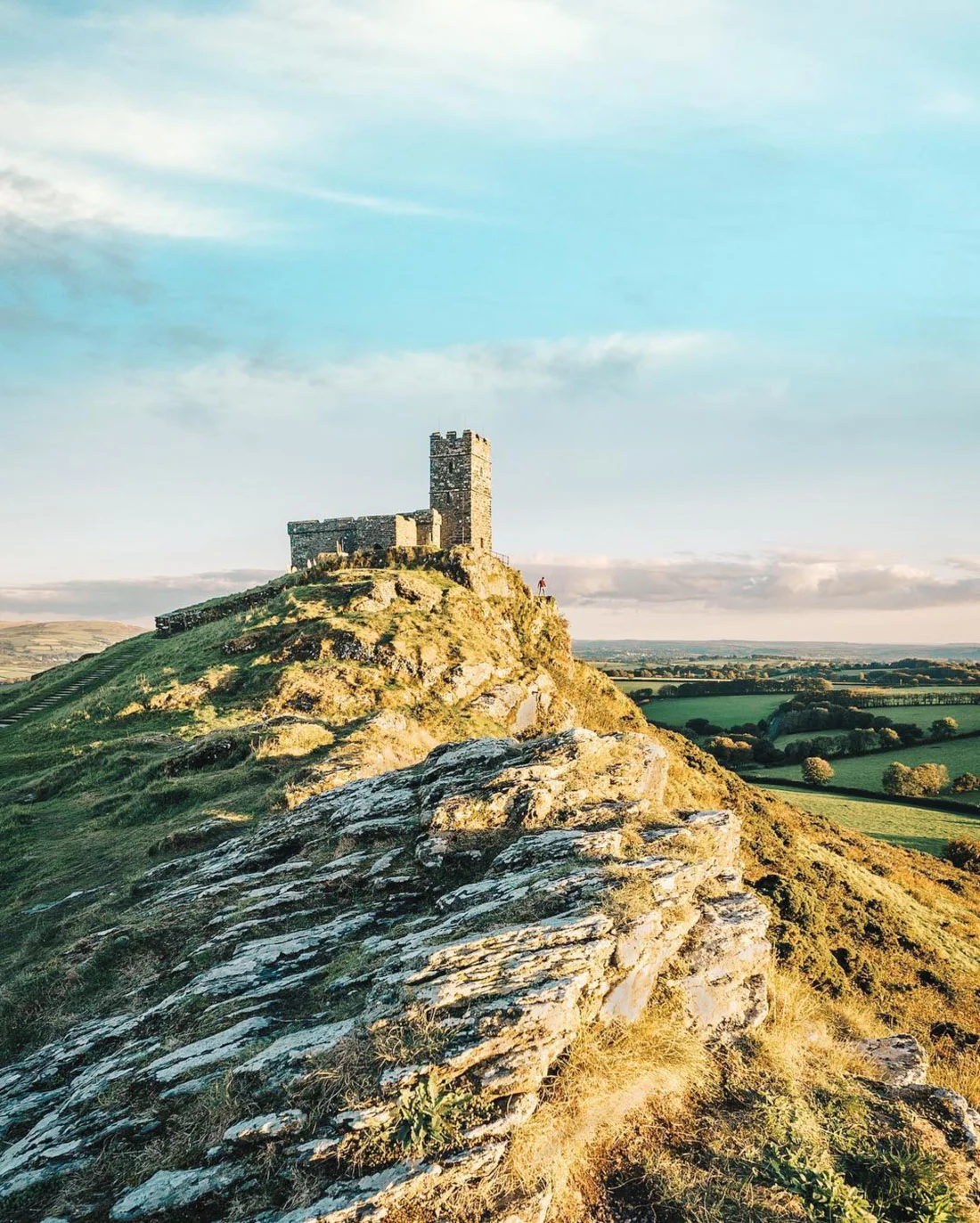
Brent Tor
9. Brent Tor Church
Officially known as the church of St Michael de Rupe, this fairy tale building is located 1100 feet on of Brent Tor. Founded in 1130, the church is fully working as one of the highest altitude places of worship in England and has been for almost 900 years.
This place is beautiful and worth a visit all year round, whether that be in basking sunset, winter frost or morning mist. Being just a short 10 minute walk from the car park, Brent Tor is a unique photo opportunity that is accessible to many, with masses of history behind it if that's what you love, big views and the ability to actually go inside this tiny church to explore for free, it's a must visit place on Dartmoor!
Nearby is the famous National Trust owned Lydford Gorge that has amazing walks and the White Lady Waterfall at its centre. The village of Lydford is also only a small drive from Brent Tor too which has a castle and a peaceful local pub opposite fittingly called 'The Castle Inn' which is a great place to stop for a quiet pint after a day exploring.
10. High Willhays

High Willhays
This place deserves a special mention at the end because it is the highest point on Dartmoor and the South of England below the Brecon Beacons making the statement, 'I was standing higher than anyone in the South of England' true for the most part! This, like Ger Tor, is a journey only advised if you're properly equipped as it is mostly off the beaten track and a steep climb.
You can get to High Willhays in multiple ways, however, to get the best out of this place I would highly recommend beginning on the Dartmoor Ringroad past Okehampton Army Camp. The walk is longer, around 4km as a round trip across rougher terrain, but if you're a keen adventurer and want to see some amazing views I highly recommend this route.
Passing the Army camp over a cattle grid, take the right road that's immediately after. Driving down here you'll see two tors that you're heading for, both peaks you'll be visiting on this route. As you drive, there are quite a few pull-ins that you're allowed to park in so stopping in one close to the tors is the perfect place to begin. From here, follow the chain of tors to your right, these will be West Mill Tor, Yes Tor and finally, High Willhays - all in that order and the next one visible from the previous. This is just a rough guide, so I advise you follow an OS map and ensure you check the weather before leaving!
Pick a clear day and you'll walking across Dartmoor's Highest Peaks with panoramic views across Devon and visiting High Willhays which the summit is high enough to be classed as a mountain!

Will Lamerton
Will Lamerton is a full-time landscape and lifestyle photographer based in Dartmoor National Park, Devon. With over 30,000 followers on Instagram, he's been sharing his imagery for over three years.
Working with brands internationally, Will has explored Dartmoor inside out and can offer first-hand knowledge and experience photographing this extraordinary corner of the UK.
Follow Will on Instagram: http://instagram.com/willlamerton (@willlamerton)

ON OUR BLOG
-
Active
- Feb 15, 2020 Dartmoor's Top 10 Walks
- Mar 24, 2019 Devon's Best Swimming Spots
- Mar 11, 2019 Devon's Best Activities
- Feb 6, 2019 Dartmoor's Best Photo Locations
- Feb 3, 2019 12 Dartmoor Artisans To Visit
-
Art & Culture
- Oct 8, 2025 A Scenic Dartmoor Road Trip
- Feb 15, 2020 Must-See Dartmoor Attractions
- Mar 11, 2019 Best Guided Tours
- Mar 11, 2019 Divine Devon Towns and Villages
- Mar 11, 2019 Best Attractions in Devon
- Mar 1, 2019 My Devon: A Tour Guide's Top Spots
- Feb 23, 2019 Map of Devon's Best Attractions
- Feb 3, 2019 12 Dartmoor Artisans To Visit
- Jan 31, 2019 Dartmoor's Best Prehistoric Sites
- Jan 11, 2019 The Ultimate South-West Road Trip
-
Dartmoor
- Oct 8, 2025 A Scenic Dartmoor Road Trip
- Feb 22, 2020 Stunning Dartmoor Photographs
- Feb 15, 2020 Must-See Dartmoor Attractions
- Feb 15, 2020 Things To Do On Our Doorstep
- Feb 15, 2020 Dartmoor's Top 10 Walks
- Mar 24, 2019 Town Guide: Bovey Tracey
- Mar 24, 2019 Town Guide: Moretonhampstead
- Mar 24, 2019 Town Guide: Ashburton
- Mar 24, 2019 Town Guide: Chagford
- Mar 11, 2019 A Complete Guide To Dartmoor
- Mar 11, 2019 Devon's Best Activities
- Mar 11, 2019 Best Guided Tours
- Mar 11, 2019 Dartmoor's Best Cream Teas
- Feb 6, 2019 Dartmoor's Best Photo Locations
- Feb 3, 2019 12 Dartmoor Artisans To Visit
- Jan 31, 2019 Dartmoor's Best Prehistoric Sites
-
Day Trips
- Mar 10, 2019 Day Trip: Totnes
- Mar 10, 2019 Day Trip: Salcombe
- Mar 9, 2019 Day Trip: Exeter
- Feb 3, 2019 Day Trip: Cornwall
- Feb 2, 2019 Day Trip: Dartmouth
- Feb 1, 2019 Day Trip: North Devon
-
Food & Drink
- Sep 11, 2025 Best Devon Brunches
- Jul 10, 2025 Devon's Perfect Pubs
- Apr 10, 2025 Best Restaurants in Devon
- Mar 24, 2019 Devon's Best Outdoor Eating
- Mar 12, 2019 Devon's Best Cafes
- Mar 11, 2019 Dartmoor's Best Cream Teas
- Mar 10, 2019 A Foodie's Guide to Devon
- Mar 9, 2019 Best Experiences For Foodies
- Mar 9, 2019 Fine Dining With Our Private Chef
- Mar 9, 2019 Devon's Best Fine Dining Restaurants
-
Highlights
- Feb 22, 2020 Stunning Dartmoor Photographs
- Feb 15, 2020 Must-See Dartmoor Attractions
- Feb 15, 2020 Things To Do On Our Doorstep
- Jun 8, 2019 20 Ultimate Devon Holiday Ideas
- Mar 24, 2019 Devon's Best Swimming Spots
- Mar 24, 2019 Summer Holiday Ideas For Devon
-
Honeymoons
- Jan 5, 2026 10 Romantic Things to Do in Devon for a Dreamy UK Honeymoon
- Feb 3, 2019 8 Reasons To Honeymoon With Us
- Feb 1, 2019 Eight Ideas For A Devon Mini-Moon
-
Interior Design
- Mar 12, 2019 Devon's Best Interiors Shops
- Jan 20, 2019 Like Our Style? Get The Look, Part II
- Jan 12, 2019 Like Our Style? Get The Look, Part I
-
Luxury
- Mar 9, 2019 Fine Dining With Our Private Chef
- Mar 9, 2019 Guide: Luxury Cottage Breaks in Devon
-
Map
- Feb 23, 2019 Map of Devon's Best Attractions
-
Road Trips
- Oct 8, 2025 A Scenic Dartmoor Road Trip
- Jan 11, 2019 The Ultimate South-West Road Trip
-
Romance
- Jan 13, 2026 Romantic Breaks in Devon: Where to Stay, What to Do and How to Avoid the Crowds
- Jan 5, 2026 10 Romantic Things to Do in Devon for a Dreamy UK Honeymoon
- Nov 30, 2025 10 Reasons to Book a Romantic Winter Break on Dartmoor
- Mar 24, 2019 Devon Marriage Proposal Locations
- Mar 9, 2019 Guide: Luxury Cottage Breaks in Devon
- Mar 9, 2019 Devon's Best Fine Dining Restaurants
- Feb 3, 2019 8 Reasons To Honeymoon With Us
- Feb 1, 2019 Eight Ideas For A Devon Mini-Moon
-
Shopping
- Mar 24, 2019 Town Guide: Moretonhampstead
- Mar 24, 2019 Town Guide: Ashburton
- Mar 24, 2019 Town Guide: Chagford
- Mar 12, 2019 Devon's Best Interiors Shops
- Mar 11, 2019 Devon's Best Towns For Shopping
- Mar 10, 2019 A Foodie's Guide to Devon
- Mar 10, 2019 Day Trip: Totnes
- Mar 9, 2019 Day Trip: Exeter
-
Summer
- Mar 24, 2019 Devon's Best Outdoor Eating
- Mar 24, 2019 Devon's Best Swimming Spots
- Mar 24, 2019 Summer Holiday Ideas For Devon
- Mar 11, 2019 Devon's Most Beautiful Beaches
- Mar 11, 2019 Devon's Best Public Gardens
- Mar 10, 2019 Day Trip: Salcombe
- Feb 3, 2019 Day Trip: Cornwall
- Feb 2, 2019 Day Trip: Dartmouth
-
Swimming
- Mar 24, 2019 Devon's Best Swimming Spots
- Mar 11, 2019 Devon's Most Beautiful Beaches
-
Town Guides
- Mar 24, 2019 Town Guide: Bovey Tracey
- Mar 24, 2019 Town Guide: Moretonhampstead
- Mar 24, 2019 Town Guide: Ashburton
- Mar 24, 2019 Town Guide: Chagford
- Mar 11, 2019 Divine Devon Towns and Villages
- Mar 11, 2019 Devon's Best Towns For Shopping
- Mar 10, 2019 Day Trip: Totnes
- Mar 10, 2019 Day Trip: Salcombe
- Feb 2, 2019 Day Trip: Dartmouth
-
Winter Breaks
- Jan 8, 2026 Dartmoor's Best Autumn Walk
- Nov 30, 2025 10 Reasons to Book a Romantic Winter Break on Dartmoor
- Jul 10, 2025 Devon's Perfect Pubs
- Mar 12, 2019 Devon's Best Interiors Shops
- Mar 11, 2019 Dartmoor's Best Cream Teas
- Feb 3, 2019 20 Things to Do on Dartmoor This Winter

Dartmoor's Best Prehistoric Sites
Dartmoor has more Bronze Age remains than anywhere else in Britain. We highlight the moor’s most notable archaeological sites..
Dartmoor has the highest concentration of Bronze Age remains in Britain. Here’s our guide to the moor’s most notable archaeological sites, including standing stones, hut circles, burial chambers and stone rows.

Merrivale Stone Row
You can’t go far in Dartmoor National Park without seeing traces of the prehistoric people who came before us, and left evidence of their lives in the form of stone circles, graves, hut circles and cists: stone-built boxes used to house the bones of the dead. These remnants, fascinating in themselves, chime perfectly with the elemental mysticism of Dartmoor, which has long provided artists and writers with inspiration.
The area has the highest concentration of Bronze Age remains in Britain, as well as many Neolithic traces. The climate would have been warmer and more hospitable than it is now, and the current bare expanses of moorland would have been cloaked in trees: indeed it was the Neolithic settlers who began to clear the land for cultivation.
The most dramatic – and mysterious – structures left by these early settlers are the standing stones or menhirs, referred to locally as long stones. There are arranged in circles or rows, whose function is the source of endless speculation. There are fine examples at Upper Erme, Drizzlecombe, Laughter Tor and Merrivale.
Less dramatic but perhaps even more evocative are the hut circles, of which there may be as many as 5000 on the moor. These are the ruins of ancient homes, some of which feature stone porches; it’s thought that their conical roofs would have been timbered and thatched. Bronze Age Grimspound is the most famous example, where both the hut foundations and an enclosing wall survive, backed by rugged moorland.
Grimspound
Dating back around 3000 years to the late Bronze Age, this extensive moorland site comprises the ruins of 24 roundhouses, as well as a 150 metre-long, three-metre thick encircling wall, though to have been used as barrier to keep wild animals out and farmed animals in. One of the key ancient sites of Dartmoor, excavations revealed porches, paved floors, hearths, raised benches, cooking holes, charcoal, pottery and flint scraping tools. The imposing entrance is flanked by high walls, with a passage 1.8 metres wide which is roughly paved. A stream running through the northern half of the enclosure would have provided fresh water, and explains the settlement’s exposed position. The walls of the houses within the enclosure were probably not much higher than they are now, and covered with conical roofs of turf or thatch. A number of low rubble banks against the internal face of the enclosure wall probably formed sheep or cattle pens. Immediately south-east of the enclosure the remains of at least nine more houses survive, all linked to rubble banks forming part of a field system.
Childe's Tomb
Sitting on open moorland, this reconstructed granite tomb topped by a rugged cross is said to honour a Saxon hunter called Childe, who died here during a storm having disemboweled his horse and climbed inside it for warmth. The scattered stones of the vandalized tomb were reassembled in the 1880s.
Scorhill stone circle
Scorhill comprises a Bronze Age circle of tall granite stones, 23 standing and 11 which have hit the moorland over the centuries. The tallest of the stones frames the sunset at midsummer, suggesting it may have been an astral timepiece.
Staldon stone row
The longest stone row on Dartmoor, with the rugged rocks leading walkers for 500m up the steady rise of Stalldown Hill, and ascending in height till they reach 2.5 metres. Statistics aside, this is one of the most mystical and enigmatic sites on the moor.
Sousans stone circle
These twenty-two low stones making a neat circle are thought to be the remnants of a cairn, or burial mound. A cist (stone chamber) sits at the centre of the circle.

Nine Maidens
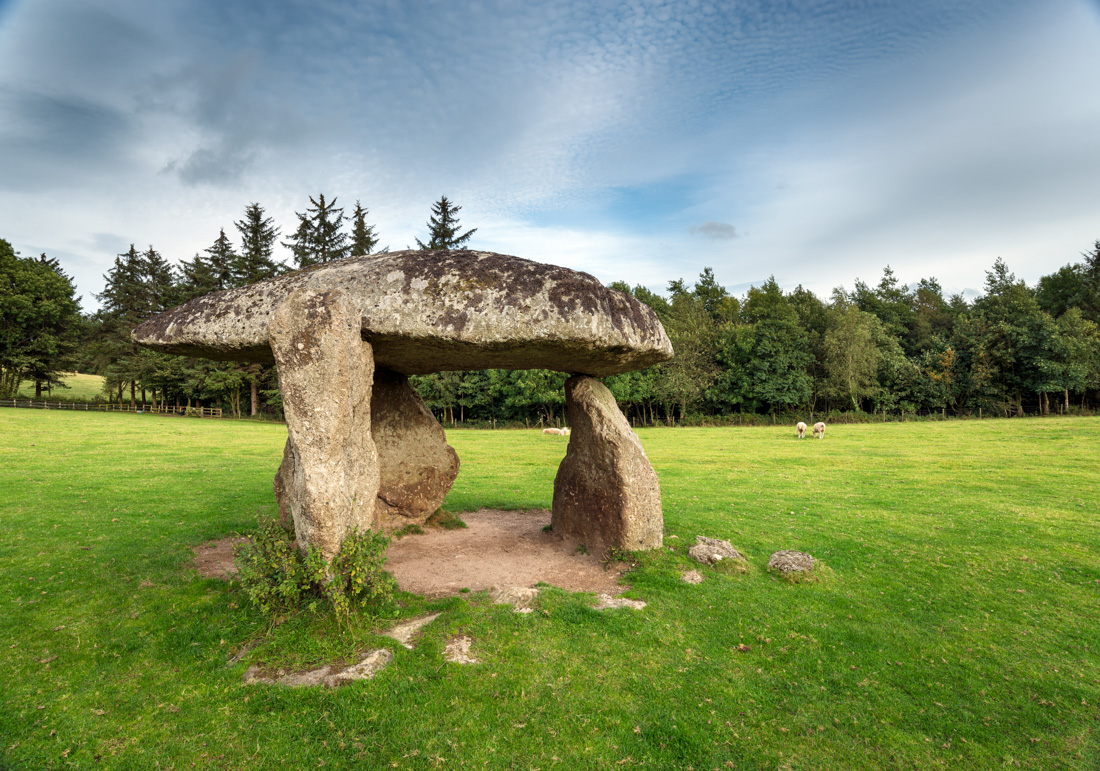
Spinster’s Rock
Merrivale stone rows
These parallel lines of stones embedded in the soil are one of the many mysteries of Dartmoor: the function of the rocky corridor is unknown.
Nine Maidens
The Nine Maidens, also known as the Seventeen Brothers, is a Bronze Age stone circle located near the Dartmoor village of Belstone. The stone circle functioned as a burial chamber, although the cairn has since been robbed and the cist - burial chamber - destroyed. The Nine Maidens is an incomplete stone circle with sixteen still standing. The stones are said to have originally been nine maidens who were cast into stone and damned to dancing every noon for eternity as a punishment for dancing on the Sabbath, but the story has also involved seventeen brothers. It is also said that the ringing of the nearby church bells brings them to life.
Spinster’s Rock
The best surviving example in Devon of a neolithic burial chamber (known as a dolmen or cromlechIn) , erected around 3500-2500 BC. The chamber probably contained many bodies and would originally have been covered by a long earthen mound. The name derives from folklore that it was erected by three spinsters before breakfast.

Scorhill
Hound Tor deserted village
The most easily accessible medieval village on the moor, the remains sit at the bottom of Hound Tor. It has four Dartmoor longhouses, many with a central drainage channel, and several smaller houses and barns dating from the 13th century. The settlement consists of a cluster of 13th century stone longhouses – in which the family lived at one end and the animals at the other – on land that was originally farmed in the Bronze Age. Pollen evidence indicates that farming had stopped by 1350, but recent analysis of pottery suggests that the village was probably occupied until the late 14th or early 15th century. Hound Tor was probably deserted in the early 15th century. Look out for the oven, tucked in among the grass. From the top of Greator Rocks, there is a fine view over the abandoned village and the surrounding moors.
RELATED ARTICLES


The Ultimate South-West Road Trip
From the Georgian city of Bath, through the wilds of Dartmoor, to the sandy coves of Cornwall - here’s the itinerary for our favourite road trip through the West Country.
Moorland View makes a perfect pitstop on a road trip through the South West of England. Here are our favourite ideas for a driving tour of the West Country.

Credit: Tom Arrowsmith
1. Bath
Superb Roman remains, glorious Georgian architecture, natural hot spas and first-class shopping – the golden city of Bath has it all. It’s not all about the Romans though – author Jane Austen was Bath’s most famous resident.
2. Stonehenge
World Heritage Site Stonehenge is one of the most important prehistoric monuments in the world. Dating back an astonishing 5,000 years, its exact purpose has been long debated.
3. Stourhead Gardens
One of the world’s finest 18th-century landscaped gardens, with elegant vistas and classical and gothic follies.
4. Bristol Suspension Bridge
Clifton Suspension Bridge, designed by the great Victorian engineer Isambard Kingdom Brunel, has a spectacular setting on the cliffs of the Avon Gorge. It is the defining symbol of Bristol, drawing thousands of visitors a year who stroll across for views of ancient Avon Gorge and elegant Clifton.

The Georgian city of Bath

Dartmoor National Park, Devon
5. Salisbury Cathedral
Follow in the footsteps of medieval pilgrims as you admire an original copy of the Magna Carta, spot Europe’s oldest working clock and climb Britain’s tallest cathedral spire to look out across the Wiltshire countryside.
6. Dartmoor
One of the UK’s largest wildernesses. Come to see English villages lost in time, romantic English gardens and grand Downton Abbey-style country homes. Our boutique holiday cottage, set in the quintessentially English thatched Devon village of North Bovey, makes the perfect stopover.
7. The Eden Project, Cornwall
Dubbed the eighth wonder of the world, Cornwall’s Eden Project is a series of bubble-like ‘Biomes’ nestled in a crater surrounded by breath-taking scenery, including rainforests, mangrove swamps and treetop gardens.

Eden Project, Cornwall
8. Penzance
Famous for its pirates, Penzance is a historic port near the tiny island of St Michael's Mount. With one of the mildest climates in the UK and beautiful sugar-white sandy beaches, it has an abundance of palm trees and gardens full of sub-tropical plants.
9. Cornish fishing villages and towns
St Ives, Mousehole, Port Isaac - choose your favourite from Cornwall’s quaint fishing villages.

Cornwall. Credit: Benjamin Elliot
10. Lands End
Land's End is Britain’s most south-westerly point and one of the country’s most famous landmarks. From the 200 foot high granite cliffs that rise out of the Atlantic Ocean you can gaze across to the Longships Lighthouse, the Isles of Scilly and, beyond that, towards North America.
RELEVANT ARTICLES


Devon tour guide, Alex Graeme, knows more about the county than most. Here, he reveals his 10 favourite Devon destinations.