
Your Custom Text Here

A Scenic Dartmoor Road Trip
This scenic drive across Dartmoor takes in a Bronze Age village, ancient woodland, cosy pub, pretty hamlet and epic viewpoint.
A Scenic Dartmoor Road Trip — Starting and Ending at Moorland View Cottage

Moorland View: The Perfect Starting Point
Set in the heart of Dartmoor National Park, North Bovey is one of Dartmoor’s prettiest and most unspoilt villages — and home to Moorland View Cottage. With no streetlights and barely any traffic, it’s a calm, restorative place to begin and end each day.
Enjoy a slow farmhouse breakfast back at the cottage, then set off knowing every stop on today’s route sits comfortably within reach.
1. Explore a Bronze Age Village at Grimspound
Your first stop is Grimspound, one of Dartmoor’s most atmospheric ancient sites. Dating back to around 1300 BC, this stone-walled settlement contains 24 Bronze Age hut circles enclosed by a granite perimeter wall.
Its haunting setting famously inspired Conan Doyle and appears in The Hound of the Baskervilles. Free to visit and open year-round, Grimspound is a powerful introduction to Dartmoor’s ancient landscape.
2. Visit an Ancient Oak Forest at Wistman’s Wood
Continue towards Two Bridges to visit Wistman's Wood, a rare remnant of Dartmoor’s original oak forest. Twisted dwarf oaks, thick with moss and lichen, rise from a boulder-strewn floor, creating a scene that feels almost mythical.
The gentle one-hour return walk is achievable for most visitors. Afterwards, pause for lunch or a cream tea nearby before continuing the loop.
3. Discover Dartmoor’s Dramatic Past at Princetown
In the centre of the moor lies Princetown, home to the formidable Dartmoor Prison Museum. Once housing some of Britain’s most notorious offenders, the museum offers a fascinating and unsettling insight into the prison’s past.
If the museum feels a little intense, Princetown itself is still worth a short wander, with its stark setting and sweeping moorland backdrop.
4. Stretch Your Legs Where the Rivers Meet at Dartmeet
Stretch your legs at Dartmeet, where the East and West Dart rivers meet beneath an 18th-century stone bridge. In warmer months, the shallow water is ideal for paddling; at any time of year, it’s one of the most scenic stopping points on the moor.
5. Wander One of Dartmoor’s Prettiest Villages: Buckland-in-the-Moor
Next, visit the tiny hamlet of Buckland-in-the-Moor, one of Devon’s most irresistibly pretty villages. Wander among its thatched cottages, step inside the ancient church, and walk above the village to find the Ten Commandments carved into exposed rock.
6. Browse Independent Shops and Delis in Ashburton
Known as the gateway to the moor, Ashburton is an elegant town whose prosperity was founded on cloth and tin. Today it’s a pleasure to explore, with antique shops, delis, cafés and well-regarded restaurants lining its slate-hung streets.
Ashburton is also the most convenient fuel stop on this route before heading back onto the open moor.
7. Visit the Iconic Moorland Village of Widecombe-in-the-Moor
One of Dartmoor’s most beautiful villages, Widecombe-in-the-Moor is a highlight of the drive. Its church, St Pancras, is crowned by a towering spire often called the Cathedral of the Moor. Inside, boards recount the dramatic storm of 1638, when lightning struck during a service and the Devil was blamed.
Pause for lunch at the Rugglestone Inn, with open fires and flagstone floors, or browse the National Trust shop in the square, known for woollen blankets and locally made homewares.
8. Walk to Breathtaking Views at Hound Tor
Before heading home, stop at Hound Tor, one of Dartmoor’s most accessible viewpoints. A short walk leads to sweeping views across the moor, with the remains of a medieval village lying just below the tor.
9. Return to Moorland View Cottage
As the light softens over the hills, return to Moorland View Cottage. Light the fire, sink into a deep bath, or wander down to The Ring of Bells for dinner and a drink.
This is the pleasure of staying somewhere perfectly placed: no long drives at the end of the day, just the feeling of having explored Dartmoor at its best — then coming back to somewhere quietly special.
Book Your Stay at Moorland View Cottage
Experience Dartmoor like this: unhurried, beautifully circular, and centred on one exceptional place to come home to.
AT A GLANCE
Starting point: North Bovey (from Moorland View)
Typical duration: Half day to full day (flexible)
Best for: Scenic driving, gentle walks, photography, first-time Dartmoor visitors
Best seasons: Spring to autumn (clear winter days can be stunning too)
This scenic drive is just one of many carefully curated Dartmoor experiences we share with our guests. When you stay at Moorland View Cottage, you’ll also receive:
Quiet road suggestions most visitors miss
Best timings to avoid crowds
Seasonal food and pub recommendations
Walks matched to weather and energy levels
The best Dartmoor experiences aren’t in the guidebooks — they’re shared here!
ROUTE
North Bovey → Grimspound → Wistman’s Wood → Princetown → Dartmeet → Buckland-in-the-Moor → Ashburton → Widecombe-in-the-Moor → Hound Tor → North Bovey

Dartmeet
-
Starting in North Bovey means you’re immediately on some of Dartmoor’s quietest, most beautiful roads. There’s no need to cross busy sections of the moor first, and you avoid doubling back later in the day.
Guests staying at Moorland View benefit from a natural circular route, shorter driving distances and the flexibility to dip in and out of stops depending on the weather. It’s an ideal “slow travel” Dartmoor experience — especially for a romantic break.
Many guests tell us this is their favourite day of their stay.
-
There is one main road that runs across the centre of Dartmoor, with cuntless narrow, country lanes leading off it.
Drive slowly and carefully. Sheep, ponies and cattle often wander onto Dartmoor roads, and many are injured or killed each year by speeding vehicles.
On narrow lanes, the driver closest to a passing place usually reverses. If you’re not confident, it’s fine to wait — and always offer a friendly wave of thanks.
Book your stay at Moorland View Cottage to experience Dartmoor like this: unhurried, beautifully circular, and centred on one exceptional place to come home to.
-
Petrol stations are few and far between on the moor. The most reliable fuel stop on this route is in Ashburton.
-
One of the most reliable and relaxed lunch stops on this route is in Widecombe-in-the-Moor. The village has a small selection of welcoming cafés clustered around the green, making it easy to park nearby and enjoy an unhurried break.
Widecombe is especially good for light lunches, homemade cakes and coffee, and it’s a natural pause point before heading back across the moor. On quieter days, it’s a lovely spot to linger and soak up the village atmosphere before continuing the drive.
We share timing tips with Moorland View guests to help you arrive before the busiest periods.
-
Late spring through early autumn offers the best balance of long daylight hours and road conditions. Clear winter days can be magical, but always check weather and visibility before heading out.
We provide seasonal advice to guests on arrival.
-
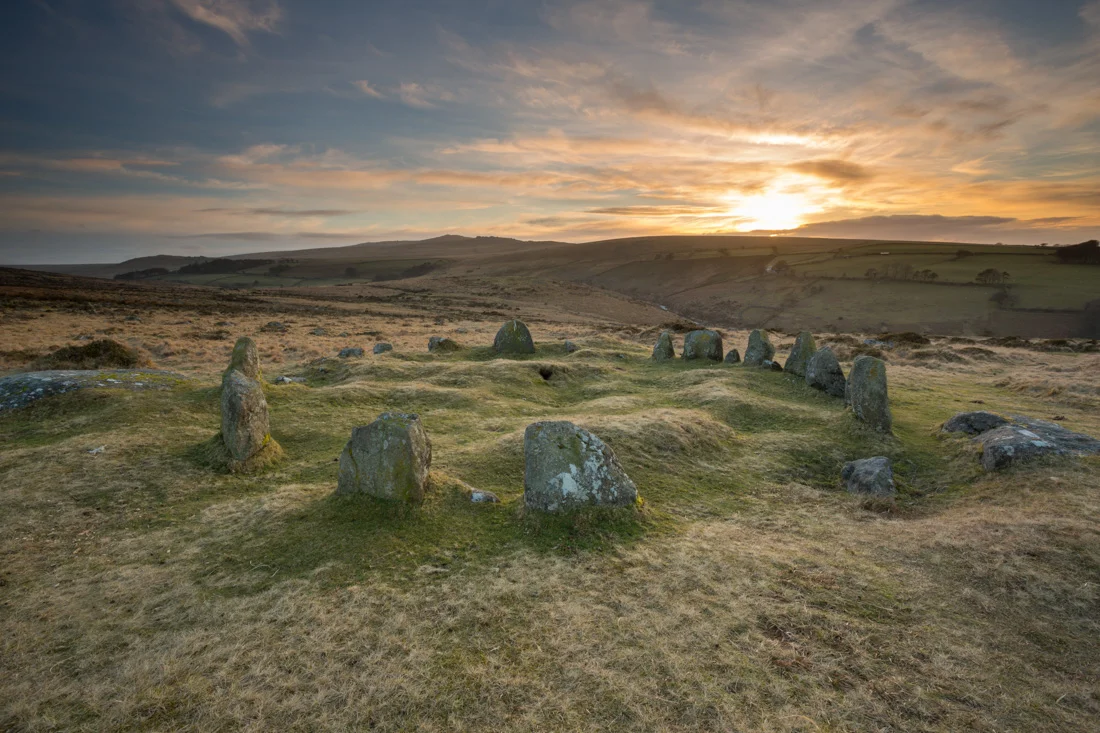
Grimspound is one of Dartmoor’s most atmospheric prehistoric settlements — a Bronze Age village set high on the open moor. Stone hut circles sit within a protective wall, with sweeping views across the landscape.
It’s a short, gentle walk from the parking area and an excellent early stop to stretch your legs. On quiet days, it feels wonderfully remote and timeless.
-
Wistman’s Wood is an ancient, moss-draped oak woodland that feels almost mythical. The walk is uneven and rocky but relatively short, making it accessible for most reasonably fit visitors wearing sturdy shoes.
Mist, low light and twisted trees make this one of Dartmoor’s most photographed places — especially atmospheric in cooler months.

Grimspound

Wistman’s Wood

Ashburton

Widecombe in the Moor

Stunning Dartmoor Photographs
Get inspired to visit Dartmoor National Park, in Devon, with our gallery of stunning landscape photographs.







Must-See Dartmoor Attractions
Our pick of Dartmoor’s best things to do and see, from fairytale castles and ancient forests to a famous prison.
Here’s our pick of Dartmoor’s best things to do, including fairytale castles, Stone Age hut circles, ancient forests - and a famous prison.

Widecombe in the Moor
1. Dartmoor Prison
The Mad Axeman, Frank Mitchell and the Acid Bath Murderer were all inmates at Dartmoor Prison, a grim, gothic jail in the mist-wreathed Dartmoor town of Princetown. Once a byword for the most violent offenders, the prison – now Category C – has a museum for the macabre-minded, featuring makeshift weapons and confiscated escape gear. Most shocking is a razor mounted on the tip of a toothbrush and vicious knuckle-dusters made of six-inch nails. Most amusing is the time-honoured classic of knotted bed sheets, once used in an escape attempt. Also on display are leather-belted tunics, which were used for restraint, and a fading photo of a "mad cupboard", in which deranged prisoners were locked and doused with freezing water.
2. Castle Drogo

Castle Drogo
Lutyens-designed Castle Drogo is a quasi-mediaeval granite castle that was the last to be built in Britain. Inside is Drewe's remarkable collection of venerable artefacts, such as 17th-century tapestries. The views of the Teign Gorge and Dartmoor are magnificent, and there’s a stunning walk along Fingle Gorge from the grounds (see ‘Walk a Dartmoor Gorge’). It’s currently undergoing restoration – please check their website for latest progress.
3. Chagford
This pretty stannary town is crammed with cafes, tea rooms, farm shops and delis. Check out Blacks for great light lunches and local farm produce, Moorland Dairy for delicious local ice-cream and Best Cellars for a small, but perfectly formed wine selection. The town has half-day closing on Wednesday afternoons.
4. Grimspound
One of the most complete examples of the moor’s prehistoric settlements, Grimspound is a stone enclosure littered with the leavings of 24 Bronze Age hut circles.First settled about 1300 BC, thevillage’s stone perimeter wall is thought to have stood at 1.7 metres high in places. The roundhouses were made from double granite walls with a rubble infill - a technique still used in dry-stone walling.The eerie setting was the model for the prehistoric hut inwhich Sherlock Holmes spent the night in The Hound of the Baskervilles. Free, and open all year round.
5. Fingle Gorge

Fingle Gorge
Taking in a fairytale castle, oak-lined gorge, ancient stone bridge and traditional pub, this two-hour walk along the Teign River is classic Dartmoor. Hunter’s Path runs higher up the valley, while Fisherman’s Path traces the spectacular wooded riverbank path, where kingfishers and woodpeckers dart between shaded pools, and trout, salmon and otters frolic in deep, clear waters. The small rocky beaches are perfect places for picnics and toe-dipping. Look out for glimpses of Prestonbury Castle Iron Age hill fort on the other side of the valley. At the bottom of the gorge is the age-old Fingle bridge, which has recessed buttresses for packhorses to pass. Behind it is Fingle Bridge Inn, which serves a mean cream tea and has a pretty terrace overlooking the river. In spring, the woodlands here are carpeted with bluebells and daffodils.
6. Wistmans’ Wood
Wistman’s Wood is a vestige of the prehistoric dwarf oak trees that used to cover Dartmoor. Here, moss-covered, boulder-strewn woodland floor is dotted with stunted oaks furred with mosses and lichen. The easy one-hour walk starts from the Two Bridges Hotel, near Princetown. Stop in for a cream tea at Princehall for afters.
7. Haytor
Haytor is one of Devon’s most famous views: on a clear day you can see the coast, the Teign estuary, the moors and rolling countryside in between. The Rock Inn in Haytor Vale is a good option for food afterwards.

Ashburton
8. Ashburton
Dubbed the gateway to the moor, Ashburton is an elegant town whose fortunes were founded on cloth and mining. It is one of Dartmoor’s four stannary towns, where tin was bought to be taxed – and its fine slate-hung frontages house a well-to-do selection of antique shops, delis, cafes and restaurants. Most notable of the latter is the Agaric Restaurant, the Fish Deli and Ashburton Deli.
9. Brent Tor
The tiny parish church of The Church of St Michel de Rupe ("Saint Michael of the Rock"), sitting atop Brent Tor, is one of the cutest you’ll ever see, and the views are spectacular. Around the Tor are Iron Ageearthworks, the remnants of a hill fort.
10. Tavistock
Tavistock is the birthplace of Sir Francis Drake, and the UK's best market town according to the Campaign to Protect Rural England. What marks it out is its food. Country Cheeses showcases hundreds of the West Country's finest, and Crebers Delicatessen are both award winners. Check out the farmers’ market (01822 820360, www.tavistockfarmersmarket.com) which fills elegant Bedford Square on the second and fourth Saturday of every month.
11. Lydford Gorge
The 90-foot White Lady waterfall at Lydford Gorge near Tavistock is a gushing torrent enclosed by a thickly wooded ravine. Look out for kingfishers and grey herons waiting patiently for fish and listen for the drumming of great spotted woodpeckers.
12. The Granite Way
Skirting the edge of Dartmoor, this 11-mile traffic-free track running from Okehampton to Lydford gives views of Okehampton Castle, Meldon Viaduct, Meldon Lake, Exmoor, Bodmin Moor and, of course, Dartmoor. The Dartmoor Inn (see 39), a wonderful gastro pub, is perfectly sited at the end of the trail for a rewarding feast.
13. Okehampton Castle
An impressive Norman stronghold laid waste by Henry VIII, and one of the largest castle ruins in the south west, Okehampton Castle ismentioned in the Doomsday Book. Ask about the haunted nightlife. Closed winter.
14. Widecombe in the Moor
With the church 'the Cathedral of the Moor' standing proud in any view, Widecombe (see photo above) has history galore and many folklore legends. Visit St. Pancras Church, with its wonderful stained glass windows, the lovely National Trust shop in the square and have lunch in the Rugglestone, a Grade-II inn with flagstone floors, open fires and Dartmoor and Butcombe Best Bitter poured straight from the barrel. The two restaurants - one of which has an open log fire– are more spacious,and outside, over a small bridge, is a large sheltered garden with picnic tables and fabulous views.
15. Dartmoor Zoo
You’ll will find 70 mammal species alone at this hugely popular zoo near Plymouth, which runs research projects and a breeding programme for tapir, slender-tailed meerkats, common marmosets and wallabies. Visitors thrill to feeding time for the big cats – lions, tigers, jaguars and cheetah – and you can also spot brown bears, wolves, monkeys amongst the menagerie here. Round off your visit with a meal at the Jaguar Restaurant.
16, Dartmeet
This is the scenic spot where the East and West Dart rivers meet; nearby is an ancient field system and an 18th century bridge. A shallow section of water makes for ideal summer paddling round the scattered rocks.

Things To Do On Our Doorstep
Only got time for a short break? Here are the best things to do within 20 minutes of Moorland View Cottage.
Only staying at Moorland View for a short break? Skip any extra driving! Here are the best places to visit just a 20-minute drive from Moorland View Cottage

Easdon Tor (photo: Will Lamerton)
PUBS, RESTAURANTS & CAFES

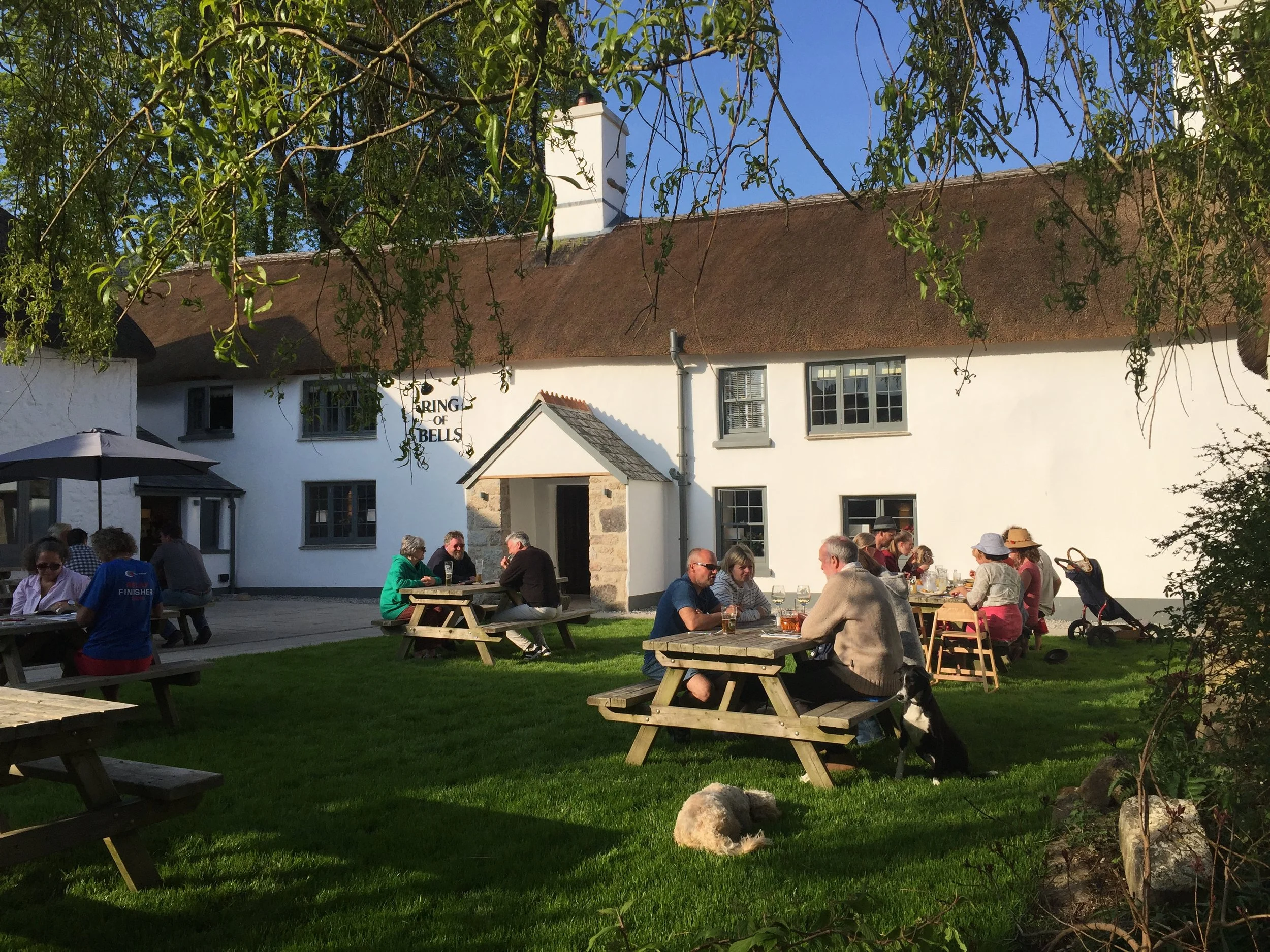
Our village pub: the Ring of Bells
The Ring of Bells, North Bovey
Our 13th century thatched pub has been rebuilt after being ravaged by fire in 2016. Restored by specialist heritage builders, every nook and cranny is just as it was, with salvaged beams weaved in with new and medieval features uncovered during the rebuild reinstated. There’s a cosy wood-beamed bar where friendly villagers swap stories, as well two restaurants - one with a wood-burner and original bread oven. Outside is a terrace and pretty garden, where sheep-shearing competitions are battled out during the village’s eccentric summer fair. There are regular pub quizzes and music nights with local bands.
The Horse, Moretonhampstead
Heralded as a ‘genuine slice of foodie heaven’ by the Michelin guide, The Horse is one of our best local restaurants. Brixham crab, lobster, scallops and wild Cornish sea bass are favourites, as is Moreton lamb, Devon Ruby beef and locally-reared rare-breed pork. The pizzas are the best we’ve ever tasted. It’s all served up in a lovely contemporary setting, with a pretty walled courtyard for dining al fresco on summer evenings.
Bovey Castle, North Bovey
The silver-service Great Western restaurant at Bovey Castle is dazzlingly glamorous – think glittery flock wallpaper, chandeliers and swirly carpets. The food wows, too: estate venison, seat trout, duck – all beautifully presented, with well thought out accompaniments. For low-key dining, their casual brasserie has a sunny terrace and stunning views. Our favourite spot for a cream tea is by the enormous log fire in the Cathedral Room lounge, while the bar is a romantic spot for a romantic evening cocktail. You can sign up for a spa day for £30 per person, per day. The castle is a beautiful 15-minute through along the river from North Bovey, or a three-minute drive.

Gidleigh Park
Gidleigh Park, Chagford
Gidleigh Park is a grand Tudor-style country manor hotel, set in 107 acres of Dartmoor woodland outside Chagford. Creative menus are delivered with pin sharp accuracy, and there’s a 50-page wine list to choose from. Well worth the £100+ price tag. Work up an appetite with a walk around the grounds.
The Birdcage, Chagford
One of our local favourites, this cheery and stylish bird-themed cafe on Chagford’s main square serves delicious all-day brunches and healthy lunches in a cosy and friendly setting. The Birdcage’s brunch options include a full English, bacon and egg muffin and smoked salmon with poached egg and avocado salsa. Bag the table outside for a spot in the morning sun. Closed Wednesdays.
The Old Forge, Chagford
Set in central Chagford, the friendly Old Forge serves all day breakfasts (think French toast with streaky bacon) and delicious lunches.
WALKS
Easdon Tor, North Bovey
For a heady shot of invigorating country air and instant perspective on your surroundings, take the 2.5-hour walk up Easdon Tor, the hill you see from the main bedroom window in the cottage. From the top you’ll see 360-degree views of Dartmoor and be kept company by wild Dartmoor ponies who come here to graze. There’s a takeaway route in the cottage.

Fingle Gorge
Fingle Gorge
Taking in a fairytale castle, oak-lined gorge, ancient stone bridge and traditional pub, this two-hour walk along the Teign River is classic Dartmoor. Hunter’s Path runs higher up the valley, while Fisherman’s Path traces the spectacular wooded riverbank path, where kingfishers and woodpeckers dart between shaded pools, and trout, salmon and otters frolic in deep, clear waters. The small rocky beaches are perfect places for picnics and toe-dipping. Look out for glimpses of Prestonbury Castle Iron Age hill fort on the other side of the valley. At the bottom of the gorge is the age-old Fingle bridge, which has recessed buttresses for packhorses to pass. Behind it is Fingle Bridge Inn, which serves a mean cream tea and has a pretty terrace overlooking the river. In spring, the woodlands here are carpeted with bluebells and daffodils. Park at Castle Drogo, Drewsteignton, or by the Mill End Hotel and walk from the other direction.
North Bovey to Lustleigh Cleave
Everywhere you turn in the little village of Lustleigh you’re offered a postcard perfect view, from the ancient church to thatched cottages to the rolling hills of the surrounding Wrey Valley. You can walk there from the cottage if you’re feeling energetic, a hike of about an hour and a half. Afternoon tea at the Primrose tea rooms offers all the scones, cream and loose-leaf tea your heart could desire. From Lustleigh you can make a wonderful circular walk up into Lustleigh Cleave, a deep cleft of trees, tors and tumbled boulders. Reward yourself afterwards with a drink under the oak beams of the 15th-century Cleave Inn.
Hound Tor
The jumble of boulders that make up Hound Tor, on the road to Widecombe, provides one of the most easily accessible and expansive viewpoints in Dartmoor. The inspiration for Conan Doyle’s moorland classic, The Hound of the Baskervilles, the tor is a gentle, half-mile walk from the car park along grassy paths and dells. Look out for ‘letterboxes’ – Tupperware boxes hidden by grown-up treasure trailers – hidden between the crevices. At the top, you can see the rocky peaks of several other tors, as well as Widecombe-in-the-Moor and Bowerman's Nose. Just southeast of the tor, are the remains of a medieval village.
Grimspound
One of the most complete examples of the moor’s prehistoric settlements, Grimspound is a stone enclosure littered with 24 Bronze Age hut circles. First settled about 1300 BC, the village’s stone perimeter wall is thought to have stood at 1.7 metres high in places. The roundhouses were made from double granite walls with a rubble infill - a technique still used in dry-stone walling. The eerie setting was the model for the prehistoric hut inwhich Sherlock Holmes spent the night in The Hound of the Baskervilles. Free, and open all year round.
Haytor
Haytor is one of Devon’s most famous views: on a clear day you can see the coast, the Teign estuary, the moors and rolling countryside in between. The Rock Inn in Haytor Vale is a good option for food afterwards.
Guided walk, North Bovey
Qualified Dartmoor guide and North Bovey resident, Debbie Jenkins, offers private hikes along old pack-horse tracks to ancient remains, stone circles, tin mines and tors. She’ll give you a history of Dartmoor as you go and point out hard-to-spot wildlife. Cost: £12 per hour (minimum two hours); £45 for a half-day, £80 a day. Details: 01647 440053.
FOOD SHOPPING
Chagford
The pretty stannary town of Chagford is crammed with cafes, tea rooms, farm shops and delis. Check out Blacks Deli for local produce, Jaded Palates for fantastic wines and West Country gins and Artisan for locally-made leather goods and crafts. The town has half-day closing on Wednesday afternoons.
Ullacombe Farm Shop, Haytor
Ullacombe Farm Shop, on the way to Haytor, sells plenty of locally made produce, from chilli chocolate to cheeses. There’s also a teashop selling superb farmhouse cakes.
EXPERIENCES
Bovey Castle spa and country club, North Bovey
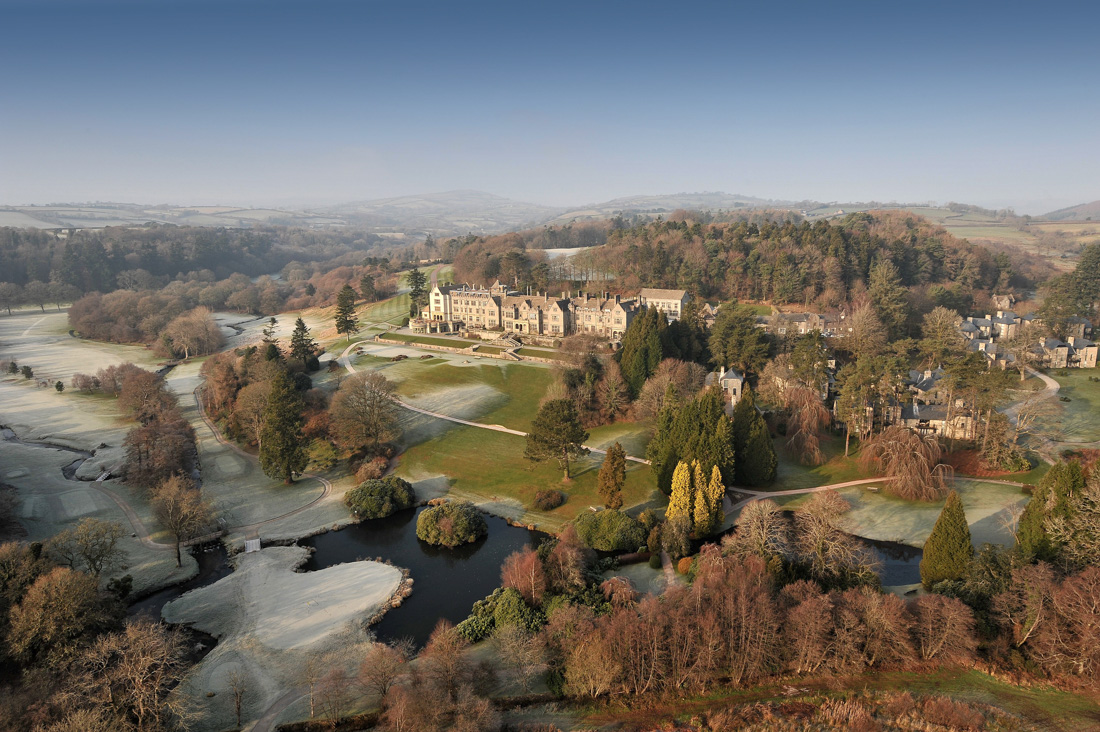
Bovey Castle
It’s not actually a castle, but what Bovey Castle lacks in heritage, it makes up for with quantity of facilities and sweeping views. Set on a private sporting estate just up the river from North Bovey, this luxury hotel has an 18-hole championship golf course, indoor swimming pool, tennis courts, fly-fishing lake, croquet lawn and archery arena. Huge stone fireplaces, soaring ceilings, ornate panelling, squishy sofas and terraces with epic views The 20-minute walk along the river, across old stone bridges and through woodlands, is beautiful.
Try artisanal Dartmoor skills, Moretonhampstead
The Dartmoor Artisan Trail is a new arts and craft trail that takes in the moor’s finest artisans, including blacksmiths, shoemakers and cider makers, and many of them work in our next village, Moretonhampstead. Watch them work, or have a go yourself on one of their mini courses.
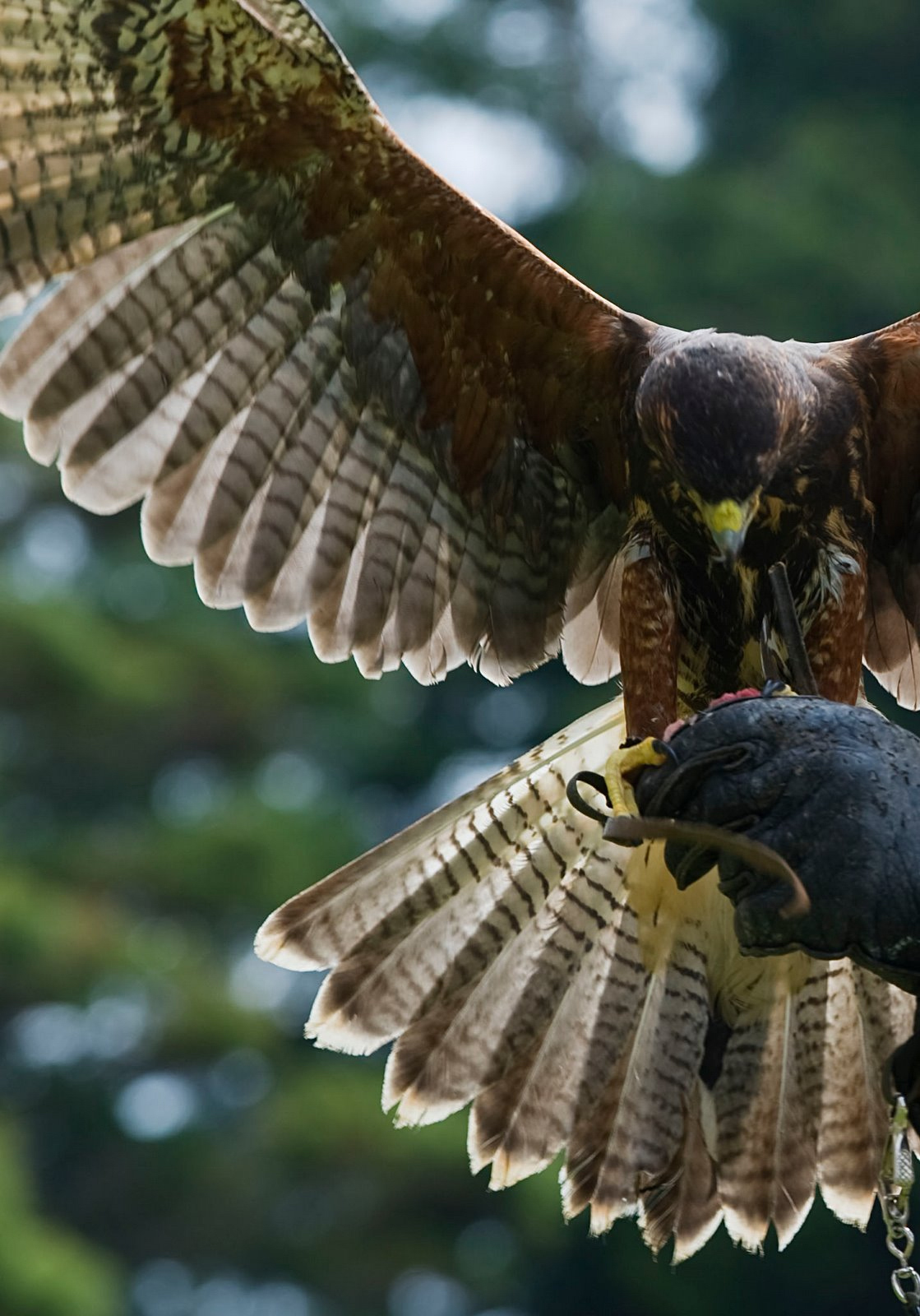
Hawking display, Bovey Castle

Stargazing on Hound Tor
Bovey Castle has a free hawking display every morning at 10am - well worth getting out of bed for. If you've always fancied yourself as a falconer, Dartmoor Hawking's Experience Day provides the chance to handle these powerful birds. Their Owl Experience is a tamer, hands-on introduction to birds of prey.
Swim in a stream-fed pool, Chagford
Just a ten-minute drive from North Bovey, Chagford Pool can't be far from heaven. Swallows nest in the changing rooms and dive-bomb the swimmers, and with the sound of the river Teign running past stepping stones, it's as relaxed as a swimming pool gets. It’s river fed, so is chilly.
Stargaze, Hound Tor
With clear, dark nights, Dartmoor is a fantastic place to view the night sky, with the Milky Way often clearly visible. Grab a picnic rug (there’s one in the cottage), torch, blanket and bottle of wine and head to the top of Hound Tor, one of the most atmospheric and easily accessible spots to stargaze.
ATTRACTIONS
Becky Falls, Haytor
One of the most picturesque of the area’s waterfalls, Becky Falls are wide and gentle rather than tumultuous. There’s a woodland café, and a little zoo provides furry friend encounters with meerkats and goats.
Castle Drogo, Drewsteignton
Lutyens-designed Castle Drogo is a quasi-mediaeval granite castle that was the last to be built in Britain. Inside is Drewe's remarkable collection of venerable artefacts, such as 17th-century tapestries. The views of the Teign Gorge and Dartmoor are magnificent, and there’s a stunning walk along Fingle Gorge from the grounds. It’s currently undergoing restoration – please check their website for latest progress.


Dartmoor's Top 10 Walks
A guide to Dartmoor National Park’s best walks, including pub walks, and walks through woods, moors and tors.

TOP 10 WALKS IN DARTMOOR NATIONAL PARK, DEVON
Ancient woodlands, leafy riversides and open moors littered with the leavings of Bronze Age man - here are the best 10 walks in Dartmoor National Park, Devon
1. Fingle Gorge
One of Dartmoor's most spectacular riverside walks, this two-hour round-trip follows a forested gorge from fairytale Castle Drogo to the traditional Fingle Bridge Inn, overlooking the river. In spring, the woodlands here are carpeted with bluebells and daffodils.
2. Wistmans’ Wood
A vestige of the prehistoric dwarf oak trees that used to cover Dartmoor, Wistman's Wood (pictured above) has occupied this lonely spot near Two Bridges for 6,000 years. The gnarly ancient oak trees rise from mossy boulders, and have branches festooned in ferns and lichen. The Two Bridges hotel is a traditional spot for a drink afterwards, but for a meal or a cream tea, or to avoid the coach parties, head to Princehall Hotel, a beautiful Georgian Manor House nearby with stunning views.
3. Easdon Tor
For a heady shot of invigorating country air and instant perspective on your surroundings, Easdon Tor, a rock-topped hill which is a 10-minute walk from Moorland View. At the top, there are 360-degree views of Dartmoor, wild horses and birds of prey.

Fingle Gorge
4. Grimspound
One of the most complete examples of the moor’s prehistoric settlements, Grimspound is a stone enclosure littered with the leavings of 24 Bronze Age roundhouses. The eerie setting inspired Sherlock Holmes' classic, the Hound of the Baskervilles.
5. North Bovey to Lustleigh
Strike out on this beautiful two-hour hike, taking in gorgeous views, a Roman fort and the magical woodland glen of Lustleigh Cleave, with its two-story high boulders. A thatched pub, The Cleave, awaits you at the end, with cream teas, delicious meals and real ales.
6. River Bovey
This flat, easy 20 minute walk from Moorland View to Bovey Castle traces the crystal-clear River Bovey, through wildflower woodlands and across stone bridges. Bovey Castle’s 250-acre estate has rose gardens, elegant lakes and well-kept lawns.

Wiseman’s Wood
7. Hound Tor
The jumble of boulders that make up Hound Tor provides one of the most easily accessible and expansive viewpoints in Dartmoor. You'll see the rocky peaks of several other tors here and views of moorland villages, and just southeast of the tor are the remains of a medieval village.
8. Brent Tor
There are few places as romantic as the top of craggy Brent Tor, where the tiny parish church of The Church of St Michel de Rupe sits pretty and gives way to spectacular views. Surrounding the tor are Iron Age earthworks and the remnants of a hill fort.
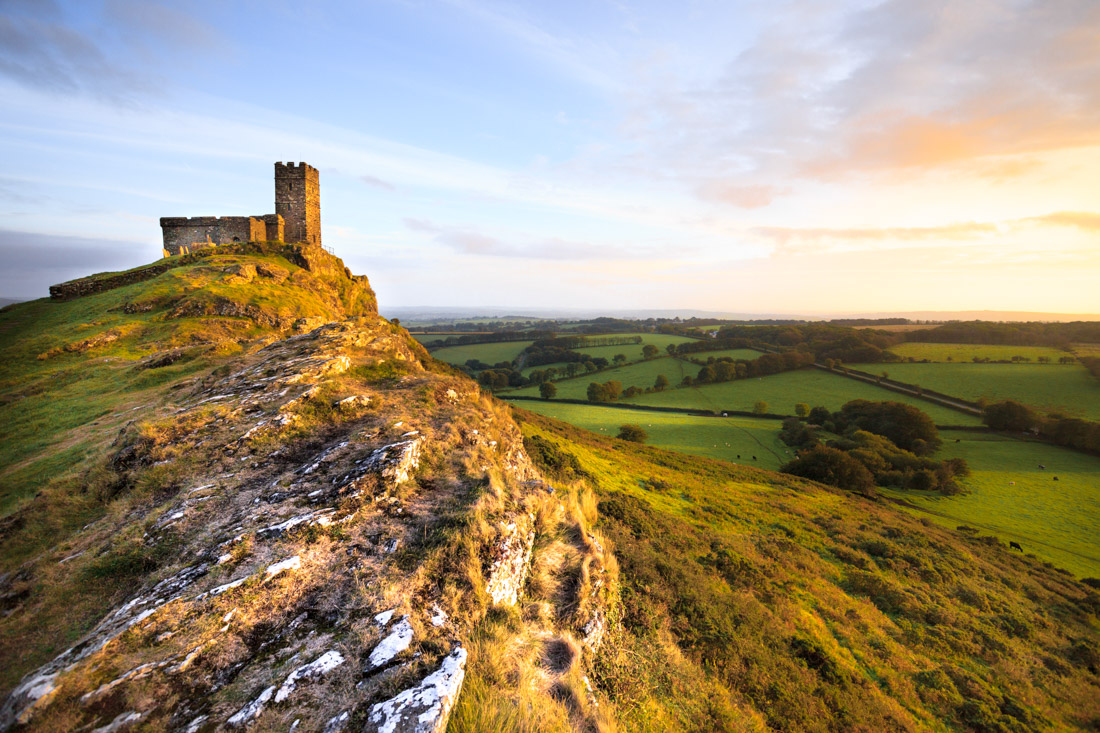
Brent Tor
9. Lydford Gorge
Fern-fringed paths wind through the deepest gorge in the southwest, with sites along the way including the 30-metre Whitelady Waterfall and the swirling Devil’s Cauldron whirlpool. The caves and gullies of this wild place were a hangout for sheep-stealing bandits in the 17th century.
10. Lustleigh Cleave
From the tiny village of Lustleigh you can make a wonderful circular walk (5 miles) past trees, tors and tumbled boulders through this deep cleft on the Sticklepath Fault. Reward yourself with a drink under the oak beams of the 15th-century Cleave Hotel.
Town Guide: Bovey Tracey
A famous crafts centre and Dartmoor’s only whisky distillery - here’s our guide to the best things to do in Bovey Tracey.
Bovey Tracey has quality independent retailers, with delicatessens, high-class butchers, farm produce, and fair-trade shops. Here’s our guide to the best places to visit.

BOOK ACCOMMODATION NEAR BOVEY TRACEY
Devon Guild of Craftsmen
The Devon Guild is the largest contemporary crafts centre in the South West, displaying beautiful pieces in an idyllic riverside setting, this former millhouse on a river in Bovey Tracey stocks a lovely range of products made by local artisans, including pottery, wrought iron pieces, jewellery and leatherwork. There are art and craft exhibitions, housed in airy white-walled studios, and upstairs is a rustic café, which sells a delicious salads and homemade cakes.
Clare’s Preserves
Clare’s Preserves is an artisan producer of multi-award winning marmalades, jams, jellies, chutneys and relishes. Clare hand-makes her products in her Bovey Tracey kitchen in small batches, using traditional open pot methods and local producers wherever possible: honey from Dartmoor beekeepers, Peter and Adam; gin from Exmoor’s small batch distillery Wicked Wolf, cider vinegar from Ostlers Cider Mill, Barnstable. Fresh seasonal produce, such as rhubarb, damsons and soft fruits come from local growers, often being picked to order and delivered the next morning – by the afternoon it’s in a jar. Labels and packaging come from companies in Devon and Somerset and they even use UK-manufactured glass jars.
The Cheese Shed
Cheeses from the West Country - including Menallack and Devon Oke plus well-loved cheddars by Keen's, Montgomery's and Westcombe. There's Harbourne Blue, an unusual and delicious 'blue goat', Vulscombe and White Nancy - both goats' cheeses. Elmhirst and Nanterrow make up the soft, fresher cheeses.
Dartmoor Whisky Distillery
The whisky won’t be ready for a couple of years, but this new distillery - the first on Dartmoor - welcomes visitors and runs tours of the distillery and tastings.
Parke
A lovely walk through National Trust land, with a wonderful cafe, Home Park, which serves great brunches, lunches and cream teas, and is dog friendly.
RELATED ARTICLES


Town Guide: Moretonhampstead
Our guide to the best things to do and places to visit in Dartmoor’s artisan town, Moretonhampstead.
Sleepy Moretonhampstead is gaining a reputation as an artisan town, with Georgian streets crammed with artists and craftspeople. Here’s our guide to the best things to do and places to eat in Moretonhampstead.

MORETONHAMPSTEAD PUBS, RESTAURANTS AND CAFES
The Horse
You've got to love a place that bills itself as a 'pub and nosebag'. Despite the village location, The Horse is a hip gastropub that wouldn't feel out of place in the big city: it serves simple, well-done food including tapas, mussels, home-cured tuna, chargrilled rib-eye and lots of pizzas.
Cross Street Cafe
The Cross Street Cafe is perfect moorland refuelling stop: olives and local cheeses sit alongside pasties, pies and tempting cakes. It does takeaway hot drinks, too.
MORETONHAMPSTEAD SHOPS
Zero
Thislovely zero-waste shop is crammed with organic produce, including pastas, pulses, grains, granolas, chocolates, herbs, spices and dried fruit – all free of plastic and pesticides. You can buy just what you need for you holiday - the idea is you take your own container – whether it’s a Tupperware, tin can or reusable bag, fill up with food, weigh and pay. They have recyclable brown paper bags if you don’t have you own container. There’s not a plastic bag in sight, nor anything wrapped in the shiny stuff. This is a not-for-profit community project about consuming food and everyday products in a way that doesn’t cost the earth. Visit Zero Waste for more information.
Michael Howard’s
Michael Howard’s is a family-run butchers sells lamb from Sanduct in nearby Lustleigh, beef from Dexter or Belted Galaways, speciality sausages, fish landed in Brixham and meat cuts that you will not be able to find in supermarkets. The delicatessen selection includes Otter Vale chutneys, Midfields Granola, Underdown butter, Sharpham cheeses, Salcombe Dairy ice-cream and Creedy Carver chicken.
The Grocers
Sells fresh fruit and vegetables, along with local produce including organic Challon Farm milk.

BOOK A BREAK
Rent a beautiful thatched holiday cottage near Moretonhampstead, with prices starting at £130.
THINGS TO DO IN MORETONHAMPSTEAD
Green Shoes
With her company listed as one of world’s most ethical shoemakers, Alison Hastie and her small Green Shoes team hand-makes footwear to order, using full-grain leathers and vegan alternatives, in a beautiful chapel. Alison welcomes visitors. Please check her website for opening hours.
Greg Abel at The Forge

One of just a handful of blacksmiths left on Dartmoor, Greg works in a 150-year-old stone forge, where vintage farm and farriers’ tools, made by previous smithies, still hang from the rafters. Greg uses traditional coal in the original hearth rather than gas, which is now more commonly used, while hammer and anvil still his main tools. Greg’s products include gates, railings, fireside sets, weather vanes, rose arches, knives, coat hooks and shoe-scrapers, which he makes for the local community. Greg welcomes drop-ins, but please call beforehand. Greg runs short courses on which you can learn to make a fire poker, toasting fork, letter opener, coat hook or barbecue butler. His website has details.
Yuli Somme at Bellacouche
Bellacouche is the UK’s only remaining maker of burial shrouds, a funereal tradition dating from the 17th century, when law decreed that the dead must be buried in wool. Yuli also makes felt urns for cremated remains, hot-water bottle covers, tea cosies, pillows, seat pads and hats which she sells in her Moretonhampstead studio, which doubles as a Unitarian chapel. Yuli welcomes visitors. Prior arrangement not required. Please check her website for opening hours.
Penny Simpson Ceramics
From her pottery studio in the artisan town of Moretonhampstead, Penny makes earthenware pots inspired by nature, with fish, birds and leaves recurring themes. A keen foodie, Penny first love is creating pottery for cooking and dining such as mugs, jugs, bowls and plates. Penny's pottery is available to buy from her shop, just below her studio. Penny also runs taster potter sessions.
RELATED ARTICLES
Town Guide: Ashburton
Ashburton has an appealing mix of antiques shops, delis and cafes. We round up the best things to do.
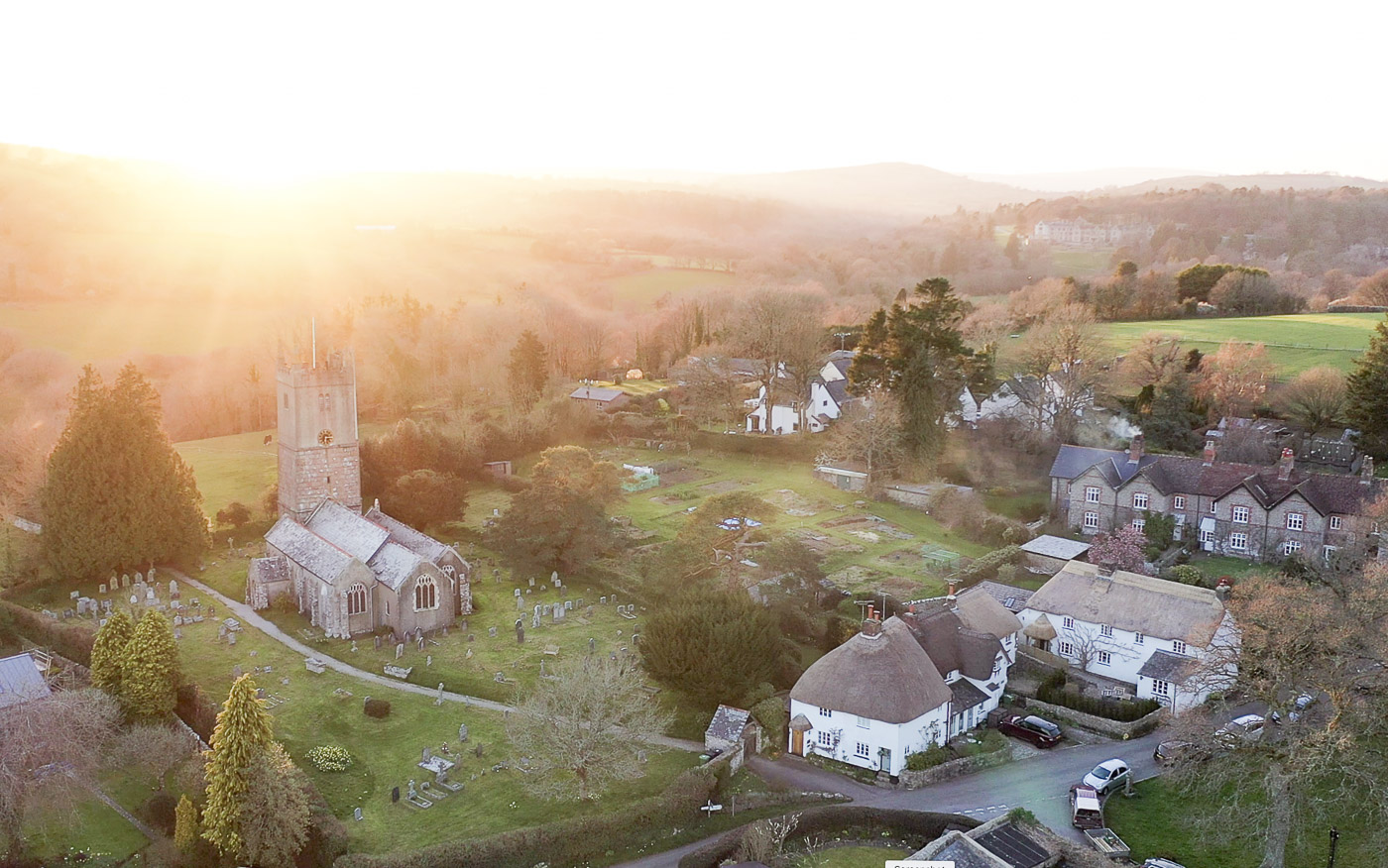
Ashburton is an appealing blend of traditional, edge-of-the-moor town and bordering-on-chic retreat. Elegant terraces and granite cottages line its winding streets, and you can shop for everything from hiking rucksacks to upcycled antiques. It's an all-round pleasant place, and a good base for the southern area of Dartmoor.

THE BEST PLACES TO VISIT IN ASHBURTON
CAFES, PUBS AND RESTAURANTS
Moorish

BOOK A BREAK TO ASHBURTON
On West Street, there's Moorish, a restaurant producing dishes that are, well, Moorish and more-ish, while on North Street there's the Agaric which has been in the Good Food Guide for a decade. A nearby deli displays 50 local artisan cheeses and 12 salamis. I could go on, but you get the point – there may be only 3,500 residents but this town is Foodie Central.
Old Library
Chefs Joe and Amy describe themselves as 'locally grown' and this idea shines through in their simple but sophisticated food that showcases prime Devon produce.
Taylor’s Cafe
Wander inside Tea at Taylor’s and you’ll be greeted by a warm interior, antique furnished decor and the smell of freshly baked scones (gluten-free options are also available). There’s also a great cake, sandwiches and soup selection.
FOOD & DRINK SHOPS
The Fish Deli
The Fish Deli sells River Teign mussels, diver-caught scallops and haddock which is "not like the rubbish up north", according to the sign. There are other fruit and veg stores, a sandwich shop and upmarket takeaways, while the most recent arrival is Moor Chocolat! selling coconut ice and Venezuelan and Ghanaian cacao.
Ashburton Deli
Ashburton Deli sells 30 local artisan cheeses, some of which are produced by producer with his very own cave for ageing, air-dried ham from Ottery St Mary in Devon, pate from Exmoor, delicious cakes from Exeter, award winning salamis from Delabole in Cornwall, locally smoked fish and meat, tea picked in Cornwall, Cornish goat’s milk chocolates, preserves from Ashburton-based Wild Garden Preserves and Hog’s Bottom Garden Delights in Tavistock, locally-made meringues, macaroons and Laydilay eggs.
Moor Chocolate
Moor Chocolate is for lovers of all things sweet. Situated halfway up the high street, you’ll find a candy coloured building. Inside, all types of candy, chocolate, and other confectionery. Here, you’ll find a sweet tooth’s dream spread of sugary snacks.
Ella’s Artisan Bakers
You’ll need an early start to catch Ella’s delicious range of breads and cakes before they sell out.
THINGS TO DO IN ASHBURTON
Ashburton Antiques Trail
There are no less than 12 antiques shops crammed in Ashburton’s town centre, and the Ashburton Antiques Trail has a special map to guide you round them. There’s everything from Victoriana to fine-art. Our favourite is Alchemy Antiques, for its carefully curated selection of gorgeous furniture and homewares.
Ashburton Cookery School
Long-established cookery school, offering more than 40 courses in everything from breadmaking to teen cuisine, via fish filleting and food photography. Queen of all she surveys here is Stella West Harling, whose Ashburton Cookery School has taught 20,000 amateur and professional chefs during the past 17 years, including five who reached the televised stages of the BBC's 2009 Masterchef series.
Town Guide: Chagford
Foodie Chagford is a vibrant village with great shops and cafes. Here’s our guide to the best things to do.
One of the prettiest of the Dartmoor villages, Chagford's stone-walled cottages, whitewashed buildings and thatched roofs are set around a quintessential village square. It's a handsome, vibrant little village, with some great places to sleep and eat, and there are views over the tors practically everywhere you look.
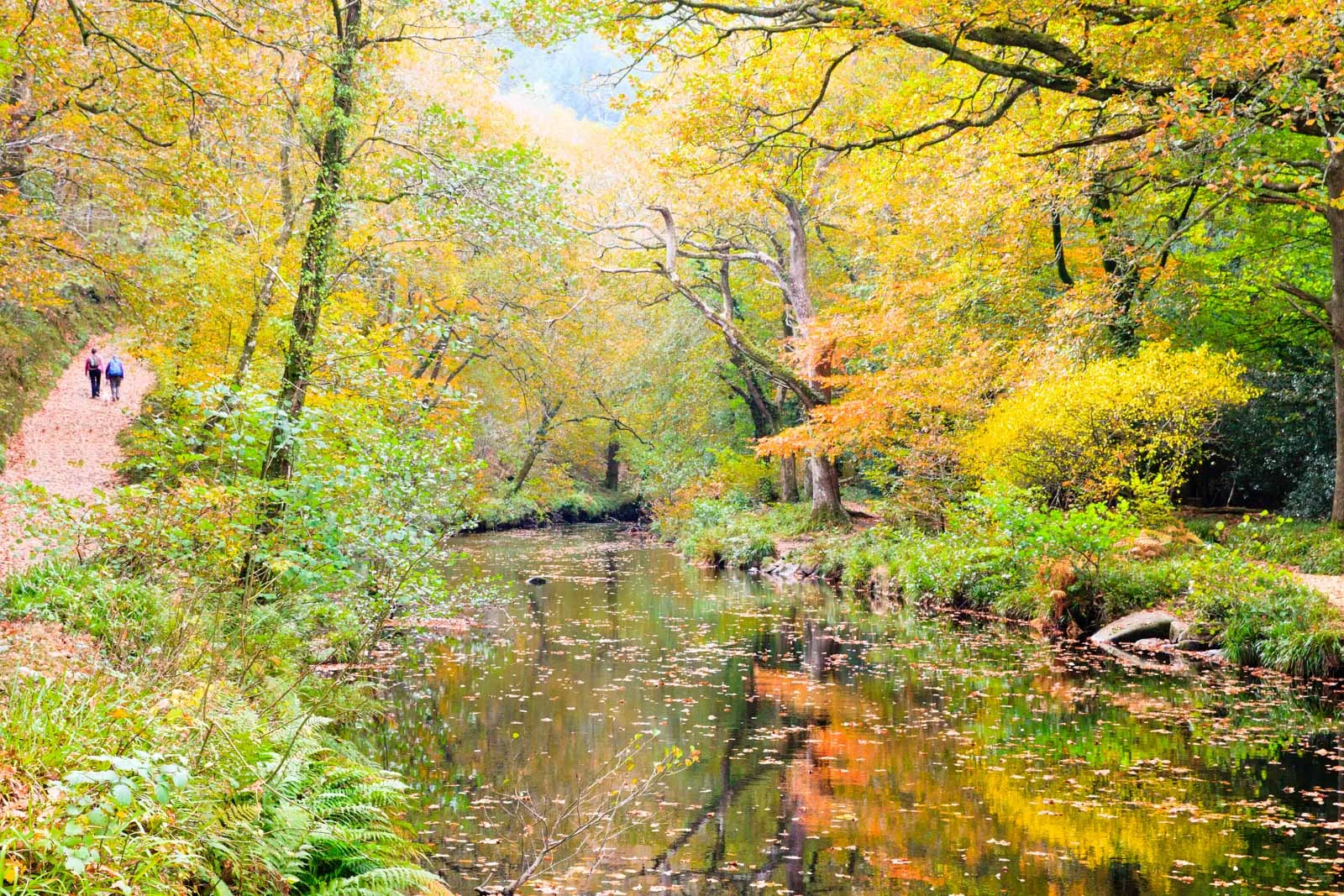
CHAGFORD CAFES
The Birdcage, Chagford
The pretty little Bird Cage cafe on Chagford’s main square serves delicious lunches, as well as great breakfasts and brunches, made with fresh, local ingredients.
The Old Forge
Run by a fun, friendly husband-and-wife team, this small cafe makes a super spot for a light bite in Chagford, from spanish omelette and chicken-and-halloumi souvlaki to mini 'pizzaninis' and yummy homemade soups.
Whiddons Tea Room
In this old-world tearoom-bistro, traditional tastes rule, with menus full of venison, quail, duck and slow-cooked beef shin. It's all neatly and creatively done and the flavours are intense.
Folklore
East London meets Chagford. Exquisite salads.
Beachwood Bakery
California expat Julia Cotts started this jewel of a bakery with the help of funding from the local community. Try her renowned ‘Village Loaf’, an organic sourdough. Other favourites include spiced vegetable samosas, pastries, cakes, cinnamon buns, focaccias and freshly made soups. > Beachwood Bakery
CHAGFORD PUBS
Chagford Inn, Chagford
Under Head Chef, Russell Hamby, The Chagford Inn produces as much in-house as possible – ranging from baking their own bread to curing our own bacon, coppa, bresaola, salt beef, pastrami, fish and our version of Serrano ham. Their Dexter beef travels about half a mile from local farmer Richard ‘Elmo’ Ellis’s farm and is butchered and prepared totally in-house. Cuts and dishes change regularly … from rib eye steak through confit Dexter flank to roasted ox liver - no part of the animal is wasted. They don’t use stock cubes or anything ready prepared, and bones are roasted every morning to produce rich and delicious stocks. Menus change daily. At the time of writing, dishes included seared scallops with squid ink risotto, confit pork belly with puy lentil cassoulet and celeriac remoulade and, for dessert, plum and ginger crumble with ice cream or clotted cream. On Sunday lunchtime, they offer a traditional roast – always beef, occasionally, another roast meat – as well as a range of other dishes including vegetarian options. Dogs are welcome.
The Three Crowns
this part-thatched coaching inn in the pretty stannary town of Chagford dates back to the 15th century. Original fireplaces and granite walls are matched well with contemporary style; muddy boots (or paws) are welcome despite plush carpets. Vibrant dishes showcase ingredients that have been caught, reared or grown in the West Country, with fish from Newlyn, meat from Crediton, eggs from Chagford and vegetables from Topsham. There’s more fish on the à la carte menu than might be expected on Dartmoor, but that’s no bad thing. Starters include Cornish mackerel with heritage tomatoes and home-smoked squab pigeon. Seasonal mains include pan-roasted gurnard, beef fillet and spring lamb. The pub classics menu offers beer-battered market fish, butcher’s choice steak and bangers and mash. Sit by the inglenook fireplace to choose a tipple from Devon ales, ciders, wines, 21 gins and Luscombe and Frobisher’s soft drinks. Devon cream teas are available daily 12-5pm.
CHAGFORD SHOPS
Beachwood Bakery
California expat Julia Cotts started this jewel of a bakery with the help of funding from the local community. Try her renowned ‘Village Loaf’, an organic sourdough. Other favourites include spiced vegetable samosas, pastries, cakes, cinnamon buns, focaccias and freshly made soups. > Beachwood Bakery
Blacks Delicatessan
Walk into Blacks for one thing and you're likely to leave with half a dozen more. Tempting breads, cheeses and olives are stacked high, along with pies, pasties, and gourmet homemade quiches including leek and Stilton or spicy pepper with chorizo.
> More fabulous places to go food shopping in Devon
Jaded Palates
Not your ordinary wine shop: Ian Renwick, owner of Jaded Palates Wines, spent three years making wine in France, and now brings this knowledge and experience as he presents a fantastic range of wines and spirits... all with a story behind them.
Artisan
Artisan is a gallery selling the work of over 40 local artisans including unique jewellery, pottery, turned wood, forged iron feltwork, original artwork, prints and photographs.
Rue des Fontenelles
Founded in France, Rue des Fontenelles specialises in French antiques and interiors, stocking French and European antique art, decorative objects, accessories and ceramics in their gorgeous shop just off Chagford Square.
Bowdens
Bowdens is an Aladdin’s Cave of a shop, that seems to cram everything you’ll ever need into three floors. Come here for outdoor gear, including walking boots, maps and compasses.
BEST THINGS TO DO IN CHAGFORD
Walk along the River Teign
This walks leads to one of Dartmoor’s most famous walks, along the breathtaking River Teign. Park at Chagford Swimming Pool and pick up the footpath that traces the river, and makes a detour right up to the imposing bulk of Castle Drogo – the last castle to be built in England.
Chagford Swimming Pool
Just a ten-minute drive from North Bovey, Chagford Pool can't be far from heaven. Swallows nest in the changing rooms and dive-bomb the swimmers, and with the sound of the river Teign running past stepping stones, it's as relaxed as a swimming pool gets. It’s river fed, so is chilly.
Visit an artisan upholsterer
Follow the sounds of chamber music that waft around the backstreets of Chagford and you'll be led to the Georgian coachhouse where Stuart devotes himself to upholstering antique and modern furniture the traditional way. His is a wonderfully riotous workshop, where walls are hung with half-broken chairs, furniture springs and enormous rolls of webbing, and floors are scattered with off-cuts of damasks and fine silks, piles of lambswool and hessian bags overflowing with horse hair and shredded coconut husks. He welcomes drop-ins.
Make your own key fob
Leather worker Martin offers two-hour workshops from his shop, Artisan, on the high street. He has a hands-on approach to his craft, often visiting tanneries to select the perfect hides. He is pictured here sampling skins at J&FJ Baker & Co, the UK’s last remaining oak-bark tannery, in Colyton, East Devon. On Martin's workshop, you will learn basic leather skills and have the chance to produce your own bookmark or key fob. If you're fast, you might also get to make a leather bookcover.
Make your own silver ring
Working from a cosy studio in the centre of the ancient stannary town of Chagford, Miriam makes silver jewellery using designs inspired by the moors and wildlife that surrounds her. You can design your own silver ring with her with during a two-hour introductory session into silversmithing. You'll learn how to cut, file, solder, sand and polish your own ring, and finish it with different textures and patinas. Miriam is one of the few people in the UK to offer lovebirds the chance to design and make their own wedding rings. You can visit her shop by appointment. Visit Silver and Moor for information.
RELATED ARTICLES
A Complete Guide To Dartmoor
Ponies and prisons, weather and wildlife - our guide to Dartmoor National Park tells you everything you need to know.
Dartmoor is Devon’s wild heart. Covering 368 square miles, this vast national park feels like it’s straight out of Lord of The Rings, with moss-covered trees, giant boulders, little thatched cottages and cinematic scenery. Here’s our guide to everything you need to know about visiting Dartmoor.
Dartmoor Facts
Dartmoor is the largest wilderness in South West England, covering 368 square miles
Dartmoor has the largest concentration of Bronze Age remains in the UK, with over 1,200 sites.
High Willhays Tor is the highest point in the UK south of the Brecon Beacons in Wales, rising to 621 metres.
Dartmoor has about 400 miles of footpaths and bridleways,
Warren House Inn is the highest inn in South West England
Canonteign Falls is second highest waterfall in England
Upper Erme stone row is the longest in the world, at 3,300 m (10,800 ft)
In Harry Potter and the Goblet of Fire, the fictional 1994 Quidditch World Cup final between Ireland and Bulgaria was hosted on the moor.
The population of Dartmoor is about 47,000.
Hoof prints found during an archaeological dig on Dartmoor were found to be 3,500 yrs old.
When to Visit Dartmoor
Most of Dartmoor’s main attractions, museums and National Trust properties open from the beginning of April to the end of October. If you can visit outside the school holidays, do: you’ll avoid M5 tailbacks and crowded beaches. If you can’t, avoid driving down on a Saturday, the changeover day for most holiday cottages. After the Easter holidays, the lanes and fields are awash with spring flowers. In autumn, the turning of the colours on the moors is glorious, and in September and October, the sea is at its warmest and the beaches at their quietest. Visiting in winter has its benefits – among them, holing up by a fire in a cosy pub.
Getting To Dartmoor
The M4 from London, the M6 from the north-west and the M1/M42 from the north-east link up with the M5 to Devon. Regular train services leave London Paddington and London Waterloo for Devon’s two main hubs: Exeter and Plymouth. Services to Exeter take from 2hrs 10 mins and start at £18.50 one-way. Services to Plymouth take from 3hrs 15 mins, with tickets starting at £20. Exeter and Plymouth are the county’s international airports, with Bristol, in nearby Somerset, another option.
Getting Around Dartmoor
Driving or cycling is the only way to roam around more remote destinations without being at the mercy of sporadic transport timetables. Off the major A-roads, Devon is a web of ancient, narrow lanes built for horses and carts – not tour coaches and cars – so the going can be slow.
Places to Stay on Dartmoor
Dartmoor has a huge variety of accommodation, from campsites and glampsites, to youth hostels, bed and breakfasts, hotels and holiday cottages. Our luxury holiday cottage is one of Dartmoor’s most romantic and makes a great destination for a Devon honeymoon, mini-moon or romantic break. Other accommodation can be found through Visit Dartmoor.

BOOK A DARTMOOR BREAK
Rent a luxury cottage in Dartmoor National Park for your next holiday, with prices starting at £125 per night.
Dartmoor Weather
The English are renowned for talking about the weather, but nowhere more so than Dartmoor, where it’s not unusual to see four seasons in one day.
Notoriously changeable, Dartmoor weather is not to be trifled with, so don’t even think about leaving home without a warm sweater and a raincoat, no matter what time of year. The ground is uneven and can be soggy, so sturdy waterproof boots are necessary in all but the driest of weathers.
On sunny days, Dartmoor is idyllic: ponies wander at will and sheep graze beside the road. It makes for a cinematic location, used to memorable effect in Steven Spielberg's WWI epic War Horse. But when sleeting rain and swirling mists arrive, you'll understand why Dartmoor is also the setting for Sir Arthur Conan Doyle’s The Hound of the Baskervilles: the moor morphs into a bleak wilderness where tales of a phantom hound can seem very real indeed.
Annually, it rains roughly 2,000mm on high moorland and 800mm in drier lowland areas, all of which indicates a preponderance of damp days. Don't let the odd raincloud curb your enjoyment of the fresh air, simply dress up and embrace the elements.
Dartmoor Ponies
There is no more iconic sight on Dartmoor than a herd of wild ponies grazing with their foals, against the majestic backdrop of Dartmoor.
Hardy, calm, strong and sure-footed, Dartmoor ponies actually thrive on Dartmoor, surviving bogs, rough terrain, bitterly cold temperatures and poor vegetation. They become very adept at knowing where to shelter, where the water sources are and where to go for the best spring grass.
Written records of ponies on the moor go back as far as AD1012 and in medieval times they were used for carrying heavy loads of tin from the mines across the moor. They’ve also been used as pit ponies used to transport granite from moorland quarries, for riding, driving, farming shepherding, taking the family to market and even carrying the postman delivering mail. From the 1900s to the 1960s, ponies were bred at Dartmoor Prison and used by guards for escorting prisoners. Ponies also maintain local ecosystems and wildlife by eating the gorse and bracken that would otherwise carpet the moors.
Although there are around 1500 ponies on the moor, only 140 of these are pure Dartmoor Ponies, which have been granted Rare Breed status. The rest are mostly hill ponies, a mix lot, having bred with Shetland, Welsh, Arab ponies. You can spot a pedigree Dartmoor Pony because it has a small head, large, wide-set eyes and alert ears. The body is strong, with a broad, deep rib cage, won’t be piebald, skewbald or contain any excessive white markings. Two schemes have been introduced to halt the decline in numbers of Dartmoor Ponies and broaden the gene pool: The Dartmoor Pony Moorland Scheme and the Dartmoor Pony Preservation Scheme.
Technically Dartmoor ponies are feral creatures, although all the horses on the moors are owned and branded by Dartmoor Commoners, farmers and residents of the moor who have grazing rights on the open moor. They have the responsibility of seeing that herds of ponies are kept healthy. Every year, in October, in an age-old ritual known as a “pony drift”, ponies are gathered together for counting and health checks, ready to be returned to rough grazing or sold at market.
Although Dartmoor ponies look cute, they aren’t tame, and will kick or bite if you get too close so please don’t feed them. It’s not unusual to see herds of wild ponies trotting through villages and chomping on village greens. Moor-dwellers have learned to keep their garden gates closed as there’s nothing they love more than new-season roses!
Dartmoor Prison
Looking more like one of the ‘dark Satanic mills’ of Victorian times than a jail, the granite hulk of Dartmoor Prison with its vast enclosing circular wall was constructed in 1805 to house French prisoners during the Napoleonic War. What they made of being housed on the open and often fog-drenched wilds of Dartmoor National Park is anyone’s guess. But the Gothic setting of the Princetown prison is perfectly suited to its subsequent grisly Gothic history.
Famous inmates include ‘The Mad Axeman,’ a Kray crony given to extreme violence who was sprung from the jail by the brothers in 1966, prompting a hunt by 200 police officers. The hunt failed, but the axeman was soon after murdered by the Krays and possibly dumped in the English Channel. Another pithily named inhabitant was the Acid Bath Murderer, who robbed his victims and disposed of the bodies by dissolving them. Dartmoor housed political prisoners as well as psychopaths: Eamon de Valera was held here following the Easter Rising in Dublin, and up to 1000 Afro-American prisoners of war did time within the walls between 1812 and 1815.
This colourful history has seen the jail immortalized in print and on the screen umpteen times: fictional escapees featured in the 1963 Bond movie From Russia With Love, in John Galsworthy’s play Escape, in Evelyn Waugh’s Decline and Fall and in Conan Doyle’s The Hound of the Baskervilles. The escape theme is given full rein in an annual charity ‘jail break’, when members of the public compete to ‘escape’ the prison and get as far away as possible in either 12 or 24 hours, without being allowed to pay for transport.
Quite an extraordinary event, given that this is still very much a working prison, owned by the Duchy of Cornwall and run by HM Prison Service. If you don’t fancy the jail-break run, you get access by visiting the Dartmoor Prison Museum, which displays uniforms, manacles and flogging apparatus as well as, more inspiringly, paintings and models made by creative prisoners over the years.
Neolithic Dartmoor
You can’t go far in Dartmoor National Park without seeing traces of the prehistoric people who came before us, and left evidence of their lives in the form of stone circles, graves, hut circles and cists: stone-built boxes used to house the bones of the dead. These remnants, fascinating in themselves, chime perfectly with the elemental mysticism of Dartmoor, which has long provided artists and writers with inspiration.
The area has the highest concentration of Bronze Age remains in Britain, as well as many Neolithic traces. The climate would have been warmer and more hospitable than it is now, and the current bare expanses of moorland would have been cloaked in trees: indeed it was the Neolithic settlers who began to clear the land for cultivation.
The most dramatic – and mysterious – structures left by these early settlers are the standing stones or menhirs, referred to locally as long stones. There are arranged in circles or rows, whose function is the source of endless speculation. There are fine examples at Upper Erme, Drizzlecombe, Laughter Tor and Merrivale.
Less dramatic but perhaps even more evocative are the hut circles, of which there may be as many as 5000 on the moor. These are the ruins of ancient homes, some of which feature stone porches; it’s thought that their conical roofs would have been timbered and thatched. Bronze Age Grimspound is the most famous example, where both the hut foundations and an enclosing wall survive, backed by rugged moorland.
In Hound of the Baskervilles, the credulous Waston enquires about the circular rings of stone above the deadly Grimpen Mire: "What are they? Sheep-pens?" His guide replies: "No, they are the homes of our worthy ancestors. Prehistoric man lived thickly on the moor, and as no one in particular has lived there since, we find all his little arrangements exactly as he left them. These are his wigwams with the roofs off. You can even see his hearth and his couch if you have the curiosity to go inside.”
Dartmoor Wildlife
It’s no surprise that this unique and wild environment with its peat and blanket bogs, granite outcrops and ancient moss-draped woodland is a haven for animals, birds and enchanting plants such as bog orchids. Many Dartmoor species are rare and even unique: this is the only place in the world, for example, where you’ll find Heckford’s pygmy moth, and the extremely rare cave shrimp lurks in underground streams here. Rare bats such as the barbastelle may be seen, and the call of the disappearing cuckoo can be heard on Dartmoor.
A particularly special environment is isolated and high-altitude Wistman’s Wood, which may date back 7000 years and features 500-year-old oak trees: lichens and mosses bedeck the branches and rocks here, and there’s a large population of adders.
Tough little Dartmoor ponies are gratifyingly easy to spot and roam freely. But keep your eyes open for more elusive wild inhabitants: you might see a polecat bounding over the rocks, or glimpse a southern damselfly flit by.
If you’d like to get up close and personal with nature on Dartmoor, try one of the excellent local tours. Bird and butterfly walks are run by Dartmoor Nature Tours, who also do fungi forays and dusk walks, when you might see roe deer, badgers, glow worms, foxes and nightjars. Dartmoor’s Daughter aims to connect people to the natural world, arranging dawn chorus trips, as well as walks with Dartmoor Pack Ponies. The Dartmoor Pony Heritage Trust at Parke in Bovey Tracey is a good place to learn about these wonderful little animals, whose independent nature suits their idiosyncratic Dartmoor setting.
Dartmoor Firing Times
The Ministry of Defence uses northern Dartmoor (Okehampton, Merrivale and Willsworthy) for manoeuvres and live-firing exercises, an area totalling 42 sq miles - just over 11% of the National Park. There’s public access to these moorland areas except when live firing is happening. Ordnance Survey's Outdoor Leisure maps show the firing ranges with a purple circumference and are marked on the ground by red and white posts with red flags flying in them. Stay well clear, unless you have a death wish. Generally, firing does not take place on Sundays or during peak holiday periods. For obvious reasons, a local by-law prohibits the collection of metal objects within these ranges. Detailed information about no-go periods can be found at tourist information offices, or by calling the freephone number 0800 458 4868, or visiting www.dartmoor-ranges.co.uk.
Dartmoor Visitor Centres
The park's main visitor centre is located in Princetown and features exhibits about Dartmoor's history, culture and wildlife, as well as changing displays of local art. The visitor centres located in Postbridge and Haytor feature information, maps, guidebooks and items for exploring the area. Most towns have their own visitor centres, but check ahead for opening times.
RELATED ARTICLES

Devon's Best Activities
Dartmoor's best activities, including star-gazing, electric biking, clay-pigeon shooting and horse-riding.
Clear away with cobwebs with our pick of the best things to do in Dartmoor and South Devon, including horse-riding, electric biking, clay-pigeon shooting and learning artisan skills from master craftsmen.

Horse-riding
Shilstone Rocks Stables in Widecombe in the Moor is one of the most safety conscious stables around, and offers hacks in small groups tailored to experience. Also very good, and slightly cheaper, is Babeny Stables. Liberty Trails do weekend tours across Dartmoor.
Fishing
Dartmoor is renowned for its sparkling clean rivers teeming wild brown trout, sea trout and salmon. Bovey Castle runs private fishing lessons. If you have a licence, stretches of the East and West Dart Rivers can be fished on the purchase of a Duchy of Cornwall permit, available at Postbridge Post Office. Fingle Bridge Inn sells daily permits. Information on lake fishing is available from the South West Lakes Trust.
The Dartmoor Artisan Trail
This self-guided trail, founded by Suzy Bennett, Moorland View's owner, links the moor's finest artisans and gives visitors the chance to try out traditional Dartmoor skills.
Cycling
Dartmoor Bike Hire, in Moretonhampstead, our next village, hire out hybrid, mountain, tandem and electric bikes, with prices starting at £18 per day. Dartmoor Electric Bikes also hire out electric bikes by the day and offer guided tours.
Clay Pigeon Shooting
There are several clay pigeon outfits on Dartmoor, with the nearest ones at Bovey Castle and Devon Clay Shooting.
Wild Swimming
Spitchwick is the place for this, with a leafy setting and clean water (that brown colour is healthy peat). There’s a gorgeous swimming and picnic spot with a high corner pool, a deep, tranquil lower corner pool for serious swimmers; and a cliff for daredevil jumpers.


Hawking
Bovey Castle has an impressive free hawking display every morning at 10am. If you've always fancied yourself as a falconer, Dartmoor Hawking's Experience Day provides the chance to handle these powerful birds.
Llama walking
Perhaps the most unlikely of Dartmoor’s possible experiences, llama walking offers the opportunity to hike with a woolly companion (the animals are famed for their calm nature) who will also carry your lunch. There’s also the option of a llama-portered high tea which you can enjoy amongst the tors.
Watersports
River Dart Country Park organize Adventure Days when visitors can experience caving, rock climbing, canoeing and much more. Salmon and sea trout fishing is another option.
Canoeing and Kayaking
The River Dart is the most popular canoeing destination in the national park - River Dart Country Park runs guided excursions. Sea Kayak Devon run trips to otherwise-inaccessible coves and caves along the south coast.
Surfing
Discovery Surf School offer lessons for beginners through to advanced surfers from their base in Bigbury-On-Sea all year round.
RELATED ARTICLES

Best Guided Tours
Our guide to best guided tours in Devon, including walking tours, city tours and nature tours.
Horse-riding, walking tours, wildlife tours and vineyard tours - here are our favourite guided tours in Dartmoor and South Devon.

Hound of the Baskervilles Tour
This one-day tour follows in the footsteps of Sherlock Holmes in Arthur Conan Doyle's The Hound of the Baskervilles, which is based on Dartmoor. Locations include tranquil village graveyards, churches with black magic associations, Bronze Age villages and moorland mires. Visit Unique Devon Tours..
Dartmoor Walking Tour
Qualified Moorland Guide and North Bovey resident Debbie Jenkins offers private hikes along old pack-horse tracks to ancient remains, stone circles, tin mines and tors. She’ll give you a history of Dartmoor and point out hard-to-spot wildlife. Call her on 01647 440053, or visit Moorland Guides.
Dartmoor Pub Tour

Discover hidden Dartmoor pubs with moorland native Tich Scott, who is an award-winning local dialect speaker. This leisurely tour takes in some of Dartmoor's best pubs, sampling locally brewed ales and ciders as you go. Tich also hosts bespoke tours. Visit Proper Dartmoor Tours for information.
Wildlife Tour
Butterfly walks, fungi forays, bird-watching and dusk walks - Dartmoor Nature Tours offer private and group tours for bespoke interests.
Dartmoor Scenic Tour
These one-day tours take in Dartmoor's highlights, including Haytor, Hound Tor, Grimspound, Fernworthy Stone Circle, Buckfast Abbey, Buckland-in-the-Moor, Widecombe in the Moor, Princetown and Dartmoor Prison. Tailor-made tours are also available. Visit Dartmoor Scenic Tours.

Hot Air Balloon Flight
Charter your own hot air balloon flight over beautiful Dartmoor with local company Aerosauraus. Flights take place at dawn and dusk so you can watching the sun rise or set from 3000ft, with 360-degree uninterrupted views - and a glass of chilled champagne.
Electric Bike Tour
If you're put off cycling on Dartmoor by having to navigate country lanes and hills, Dartmoor Electric Bikes offer a range of half-day guided tours.
Stargazing Tour
This astronomical adventure, run by local tour guide Dartmoor's Daughter, points out, through specially set up telescopes, the visible constellations on the moor, tstar clusters, nebula and galaxies. Other tours include exploring stone circle and beginners' navigation.
Vineyard Tour
This Vine to Wine tour at Sharpham Vineyard on the banks of the River Dart, guides you through through the vineyard and winery and gives you a taste of their wines and award-winning cheeses along the way.

Dartmouth Paddle Steamer
This nostalgic cruise on the UK’s last remaining coal-fired paddle steamer, takes you up the Dart River, past Dartmouth and Kingswear Castles, Britannia Royal Naval College, Noss boat yard, the quaint village of Dittisham and the Greenway Estate, former home of the late Dame Agatha Christie.
Sea Kayak Tour
Sea kayak outfit Sea Kayak Devon run trips to otherwise-inaccessible coves and caves along the south coast. You can even fish for your supper as you paddle.
River Dart Picnic Boat
For a gourmet meal with a twist, hire the new Banquet Boat, which cruises up the River Dart in the spring and summer months. The two-hour session takes in views of Dartmouth Castle and the pretty village of Dittisham, while longer tours include the option of stopping off at Agatha Christie’s holiday home and wine-tasting on the Sharpham Estate. There’s cover in case of bad weather.
Dartmoor's Best Cream Teas
No holiday to Devon is complete with a traditional cream tea. Here's our free guide to the best cream teas in Dartmoor National Park.
Just-baked scones, gooey clotted cream and lashings of strawberry jam - no holiday in Devon is complete without a traditional cream tea. We pick our favourite cream teas on Dartmoor.


Hotel Endsleigh, Tavistock
Our favourite Devon cream tea is at The Endsleigh, where supersized offerings are served in the sublime setting of an Elizabethan mansion house. Just-baked scones are served up with help-yourself quenelles of thick, clotted cream and gloopy strawberry jam, alongside fragrant loose-leaf tea in bone china cups. The wood-panelled drawing room has log fires and views of the Tamar Valley. Work up an appetite beforehand with a stroll around the stunning Grade-I listed gardens.

Bovey Castle
Huge stone fireplaces, soaring ceilings, ornate panelling, squishy sofas and terraces with epic views make Bovey Castle one of the grandest places on Dartmoor to eat cream tea. Book ahead.
North Bovey
Gidleigh Park, Chagford
For a Michelin-starred cream tea, look no further than Gidleigh Park, a grand Tudor-style country manor hotel, set in 107 acres of Dartmoor woodland outside Chagford. Work up an appetite with a walk around the beautiful grounds.
Fingle Bridge Inn, Drewsteignton
Cream teas are best enjoyed after a long walk, making Fingle Bridge Inn, on one of Dartmoor’s prettiest hiking trails, is the perfect destination. It’s not the most gourmet cream tea you’ll ever taste but this inn’s stunning location on the banks of the River Teign makes up for it. Look out kingfishers and woodpeckers darting between shaded pools, and for trout, salmon and otters frolicking in deep, clear waters. Just by the inn is age-old Fingle bridge, which has recessed buttresses for packhorses to pass. The inn has a sunny terrace overlooking the river and an open fire for wintery days.
Birdcage, Chagford
This pretty and friendly little cafe on Chagford’s main square serves delicious cream teas at a fabulous price.
The Old Forge, Chagford
This tea room in a converted forge in Chagford village centre serves up fantastic scones, alongside other delicious cakes.
Gateway Tea Room, Moretonhampstead
This traditional tea-room in Moretonhampstead offers a nostalgic take on the traditional cream tea. Expect dollies, net curtains and mismatched bone china. Don’t let the old-fashioned feel put you off - these are some of the best scones this side of Dartmoor.
RELATED ARTICLES …


Dartmoor's Best Photo Locations
Landscape photographer and social media sensation Will Lamerton reveals Dartmoor’s most Instagrammable destinations.

Leather Tor
The 10 Best Dartmoor Locations For Epic Landscape Photos
Dartmoor landscape photographer and social media sensation Will Lamerton is an expert on Dartmoor’s most Instagrammable destinations. Here, he reveals his favourite places on Dartmoor to take photographs.
Dartmoor - it has a fantastic diversity of landscapes, wildlife and rich history. With jagged rocky tors, forests, lakes and big views, this renowned corner of the UK has something to offer for everyone. With plenty of amazing hidden gems to choose from, read on to see my top 10 favourite landscapes on Dartmoor!
1. Black Tor

Black Tor
This granite outcrop, situated impressively on the edge of the West Okemont Valley is one of Dartmoor's best-kept gems. A visit to Black Tor at sunset is the most impressive time to make the hike, with glorious basking views of the valley lit up by the golden light - look out for Sourton Tor to the North, the slope of Yes Tor to the East and Branscombe Loaf to the West, an outcrop shrouded in stories of the Devil dating back to the Middle Ages.
The hike to Black Tor is fairly laid back - around 1.5 miles. Parking at the nearby Meldon Reservoir is your best bet and taking the well-marked footpath up Longstone Hill. After reaching the top of here, you'll be able to see two of the three granite outcrops that make up Black Tor with a rough trail leading to them. Make sure to wear suitable footwear as although there is a path, it can be boggy.
After your walk, if you get peckish, the small Dartmoor town of Okehampton is a short 5-minute drive from Meldon Reservoir with great options for refreshment.
2. Black-a-Tor Copse

Black-a-Tor Copse
Whilst you're visiting Black Tor, you may notice to the West, a small woodland in the valley below Corn Ridge with a river running through it. This place is called Black-a-Tor Copse, an incredible example of a high altitude Oak woodland. Like its famous cousin, Wistman's Wood, also situated on Dartmoor, Black-a-Tor Copse is made up of the same amazing twisted Oaks but this time, without the tourists. With a spread of Granite boulders lining the floor and rare lichens draping from the trees - this place is a pure fairytale.
Visiting any time of the year is special, mid-April to August you'll see moorland birds but it's most magical to visit in the morning mist, the trees standing tall and eerie in the still air. Just be sure you know how to navigate if you go there in those conditions.
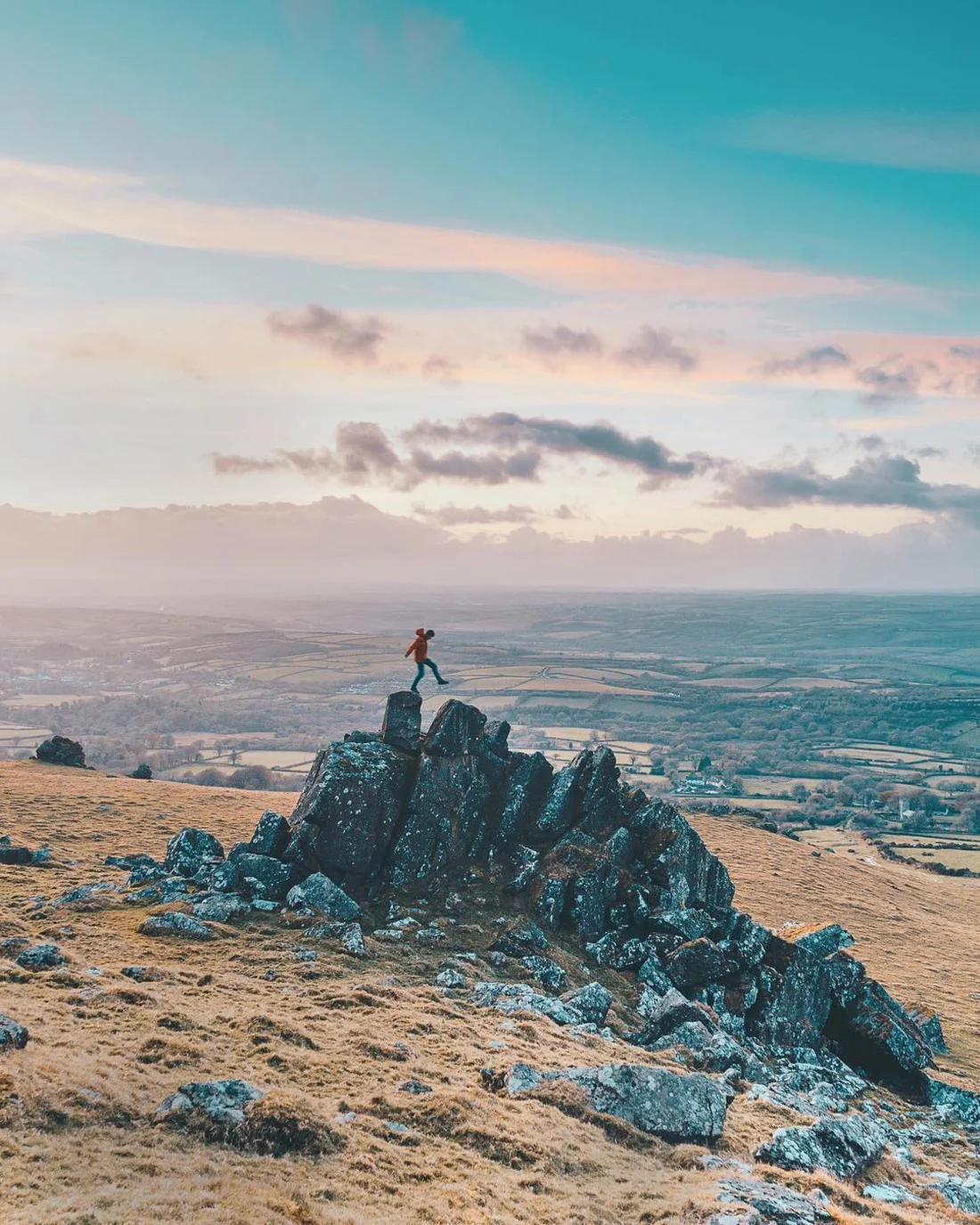
Sourton Tors
3. Sourton Tors
Located right on the Northern border of Dartmoor, dramatically elevated above anything for miles, Sourton Tors really does have some views to show off. I love this place for how easy it is to get to, giving an amazing taste of what the national park is like but without having to yomp miles off of the beaten track. Pulling off of the A30, the main car park is to the left over a cattle grid a further 2-minute drive on the road towards Tavistock. From here, visitors will follow a short 30-minute trail to the top.
From the peak, you'll have fantastic panoramic views into North Devon and some of Dartmoor's highest and most spectacular tors to the South, including Black Tor!
The location itself is also of great interest, as you ascend the tor from the car park, you may notice some long, tall, grassy mounds that appear to be man-made. What you're looking at is the remains of 'Sourton Hill Ice Factory', a patch of land constructed in the late 1800s for the purpose of collecting naturally produced ice to help food storage in the local area. Also, keep an eye out for Dartmoor ponies on the ascent, these gentle creatures love grazing on the hillside and due to the location, are quite friendly around humans - just don't feed them!

Ger Tor
4. Ger Tor
Situated as a sharp peak on the edge of the fantastic Tavy Cleave Valley, Ger tor is a location for the more experienced hikers. There is no obvious path, so waterproofs and walking boots are advised as the journey can be boggy and tough terrain depending on the time of year. Don't let this put you off though, as long as you're prepared, the views from Ger Tor are out of this world. From the top, you can see right into the valley with a distinct feeling of remoteness as you look around. For me, Ger Tor is the visual definition of Dartmoor.
Getting there, despite the lack of trail, isn't too hard. There are multiple ways to the top, but the easiest would be starting in the Lanehead, a remote car park near Nattor Farm. From here, Ger Tor is around a 1km off-road hike crossing Mine Leat via a footbridge at the base of your first stop, Nat Tor - a place to pause and admire the view before moving on. To reach your destination continue following the contour of the ridgeline along Nattor Down with Ger Tor being next peak you'll come to.
Once you've finished your walk, the Fox and Hounds Pub not too far a drive from the car park is a great walkers establishment for good, reasonably priced food. There's even a campsite attached giving you a great place to stay if you want to explore some of the other surrounding moorlands.

Venford Falls
5. Venford Falls
The elusive Venford Falls, this place is somewhat of a local secret. Not marked on maps and without any paths going to it, this beautiful twin waterfall is well hidden. I'm not going to be the one to spill the mystery location of Venford Falls, but starting near the waterworks of Venford Reservoir is a good place to begin your search. These cascades are well worth finding, but a pair of walking boots and being prepared for moderately sharp inclines is necessary. The best time to visit would be in the Spring and Summer when the surrounding woodland is in full bloom and colours.
The moorland is fairly baron around here, but the fantastic wooded Dart Valley is very close and the town of Ashburton a short 15-minute journey by car which will have all of the amenities you need.
6. Leather Tor

Leather Tor
Sat a stone's throw from the beautiful Burrator reservoir, Leather Tor is a stunning and remote, yet easy to reach granite outcrop. If you follow a sat-nav, your car will be guided to a small car park right at the foot, this leaves the peak of Leather Tor only a 15-minute hike away. I love this place as there are so many gorgeous views around.
From the top, look back towards where you parked your car and you'll see the glistening waters of Burrator reservoir, not far South, this looks fantastic in photos. Look to the West and there are some beautiful woodland areas immediately in the valley with some more classic Dartmoor tors in the distance and directly behind Leather Tor you'll find Sharpitor, another peak worth the short 1/2km walk to. Here you'll find lots of hut circles and ancient settlement areas back when Dartmoor was largely inhabited if history is your thing.
Leather Tor is great for families too, with the walk to the top a very short distance and Burrator, renowned for its cycle tracks, there's no better a place to go for some outdoor activity, nice views and plenty of spots for picnics.
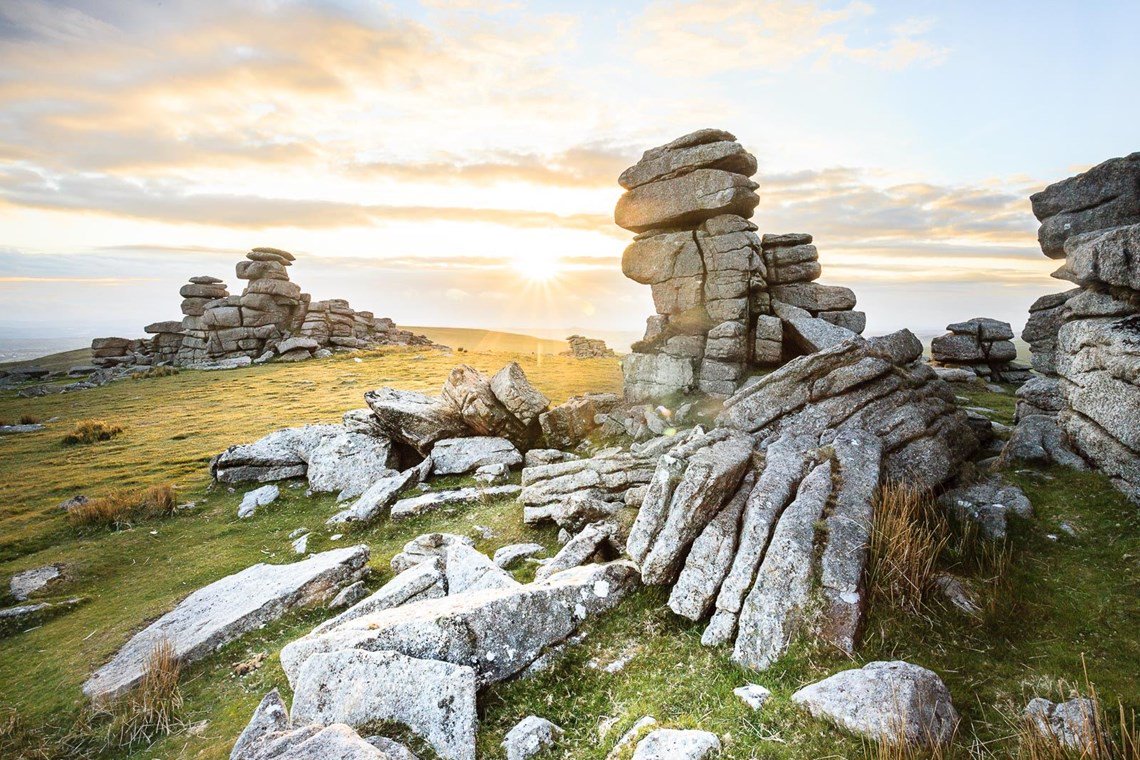
7. Great Staple Tor

Great Staple Tor
This is one of Dartmoor's more 'poster' tors. Great Staple is situated 1km from the main road to Princetown from Tavistock and is well know for it's unique and instantly recognisable 'steeples' made up of layered granite. You might encounter some other visitors up there walk but the offroad journey without much of a path tends to keep visitors low. Don't let the lack of trail put you off though, this is a fairly easy place to get to with a steady incline to the chain of tors that flank the west side of the Walkham Valley with panoramic views from the top. This chain is an excellent place to explore on Sunday afternoon, with places such Roos Tor and Great Mis Tor easily reachable after you've finished photographing the steeples of Great Staple.
Carrying on with the theme of Sunday afternoon walks, you can finish your exploration of the Walkham Valley peaks by heading into Tavistock, a historic and often bustling market town for a well-earned bite to eat and only 10 minutes away from the car park at the beginning of the walk.
If towns aren't your thing, Princetown is a further 15 minutes down the road in the opposite direction to Tavistock and is well signposted. This remote village is well off of the main road and is steeped in history with old Tin Workings and Quarries just outside of the village, the famous prison and Dartmoor National Park Visitor Centre here, you can also learn all about Dartmoor life through history.

Brat Tor
8. Brat Tor
An old favourite spot of mine. Brat Tor is an iconic hill on the A386 towards Tavistock coming from the North Moors. This outcrop is instantly recognisable thanks to the granite statue known as Widgery Cross at the very peak erected by William Widgery to commemorate the Golden Jubilee of Queen Victoria in 1887. From the top, there are more panoramic views across the Eastern section of Dartmoor and towards Cornwall if you look off of the park. With Brat Tor standing abruptly higher than most of the terrain around, I highly recommend visiting at sunset as surrounding views light up golden and the air becomes more still - it really does give you an 'on top of the world' feeling.
If sunset isn't an option, setting off for an afternoon or day trip is beautiful too, this gives you time to explore and appreciate the surrounding places such as Hare Tor, Arms Tor, Doe Tor and as mentioned above, Ger Tor and the Tavy Cleave. All these places are within 1-hour walk or less to each to each other.
To get to Brat Tor is fairly easy, as you're driving down the A386 towards Tavistock, look for the Fox and Hounds pub at the side of the road, pull in here and you can park for free. Heading behind the pub you'll see a well-trodden gravel footpath that passes the campsite also at the pub and walks towards the moors - you can actually see Brat Tor from where you have parked. This footpath leads directly to the peaks but doesn't stay gravel for long, so walking boots are still advised.
The only advisory for this place is aware Willsworthy Firing Range is very close to the tor and has many of the other surrounding tors stated above within its borders, so be aware if you want to explore them that they're not firing - you can find times online.
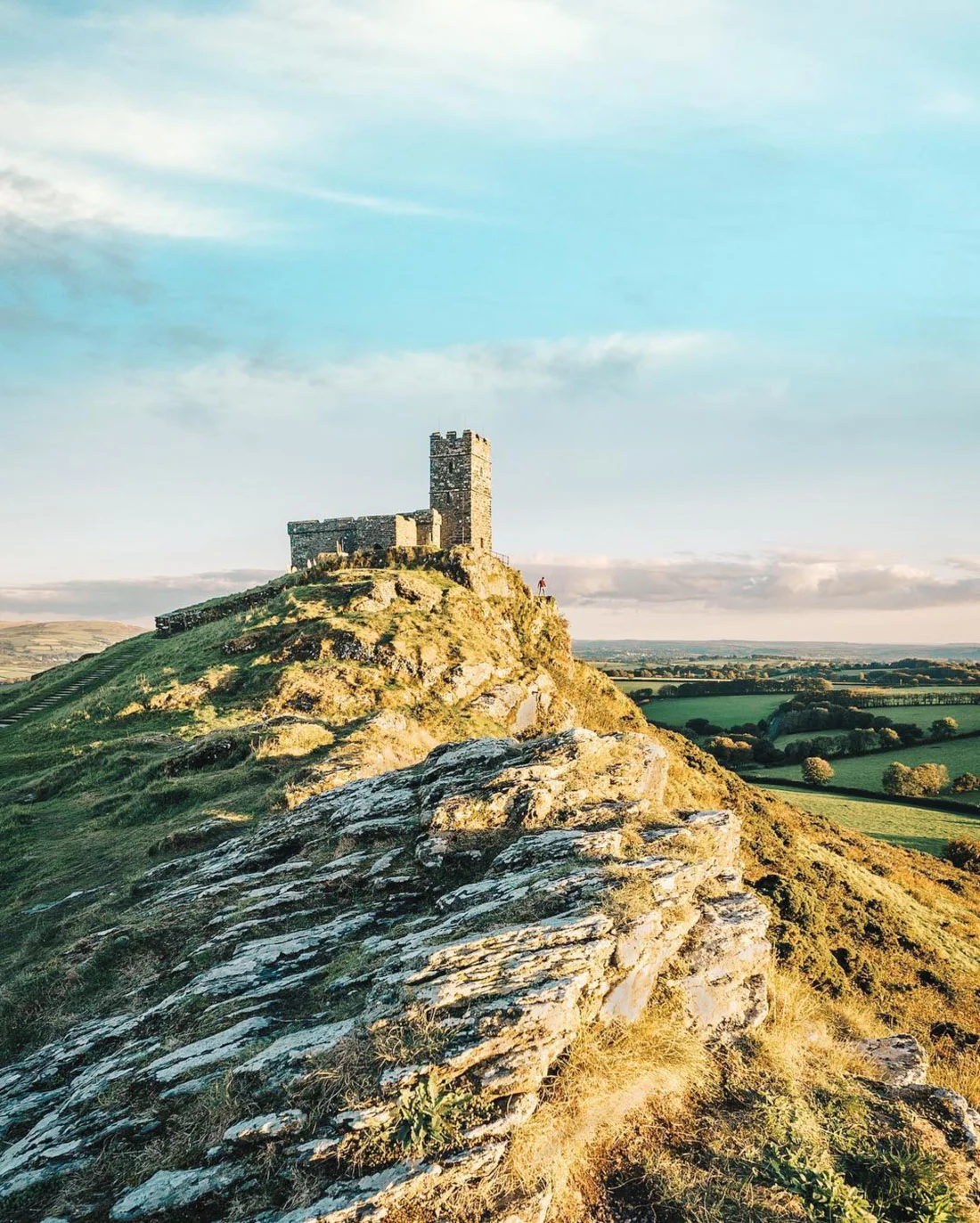
Brent Tor
9. Brent Tor Church
Officially known as the church of St Michael de Rupe, this fairy tale building is located 1100 feet on of Brent Tor. Founded in 1130, the church is fully working as one of the highest altitude places of worship in England and has been for almost 900 years.
This place is beautiful and worth a visit all year round, whether that be in basking sunset, winter frost or morning mist. Being just a short 10 minute walk from the car park, Brent Tor is a unique photo opportunity that is accessible to many, with masses of history behind it if that's what you love, big views and the ability to actually go inside this tiny church to explore for free, it's a must visit place on Dartmoor!
Nearby is the famous National Trust owned Lydford Gorge that has amazing walks and the White Lady Waterfall at its centre. The village of Lydford is also only a small drive from Brent Tor too which has a castle and a peaceful local pub opposite fittingly called 'The Castle Inn' which is a great place to stop for a quiet pint after a day exploring.
10. High Willhays

High Willhays
This place deserves a special mention at the end because it is the highest point on Dartmoor and the South of England below the Brecon Beacons making the statement, 'I was standing higher than anyone in the South of England' true for the most part! This, like Ger Tor, is a journey only advised if you're properly equipped as it is mostly off the beaten track and a steep climb.
You can get to High Willhays in multiple ways, however, to get the best out of this place I would highly recommend beginning on the Dartmoor Ringroad past Okehampton Army Camp. The walk is longer, around 4km as a round trip across rougher terrain, but if you're a keen adventurer and want to see some amazing views I highly recommend this route.
Passing the Army camp over a cattle grid, take the right road that's immediately after. Driving down here you'll see two tors that you're heading for, both peaks you'll be visiting on this route. As you drive, there are quite a few pull-ins that you're allowed to park in so stopping in one close to the tors is the perfect place to begin. From here, follow the chain of tors to your right, these will be West Mill Tor, Yes Tor and finally, High Willhays - all in that order and the next one visible from the previous. This is just a rough guide, so I advise you follow an OS map and ensure you check the weather before leaving!
Pick a clear day and you'll walking across Dartmoor's Highest Peaks with panoramic views across Devon and visiting High Willhays which the summit is high enough to be classed as a mountain!

Will Lamerton
Will Lamerton is a full-time landscape and lifestyle photographer based in Dartmoor National Park, Devon. With over 30,000 followers on Instagram, he's been sharing his imagery for over three years.
Working with brands internationally, Will has explored Dartmoor inside out and can offer first-hand knowledge and experience photographing this extraordinary corner of the UK.
Follow Will on Instagram: http://instagram.com/willlamerton (@willlamerton)

ON OUR BLOG
-
Active
- Feb 15, 2020 Dartmoor's Top 10 Walks
- Mar 24, 2019 Devon's Best Swimming Spots
- Mar 11, 2019 Devon's Best Activities
- Feb 6, 2019 Dartmoor's Best Photo Locations
- Feb 3, 2019 12 Dartmoor Artisans To Visit
-
Art & Culture
- Oct 8, 2025 A Scenic Dartmoor Road Trip
- Feb 15, 2020 Must-See Dartmoor Attractions
- Mar 11, 2019 Best Guided Tours
- Mar 11, 2019 Divine Devon Towns and Villages
- Mar 11, 2019 Best Attractions in Devon
- Mar 1, 2019 My Devon: A Tour Guide's Top Spots
- Feb 23, 2019 Map of Devon's Best Attractions
- Feb 3, 2019 12 Dartmoor Artisans To Visit
- Jan 31, 2019 Dartmoor's Best Prehistoric Sites
- Jan 11, 2019 The Ultimate South-West Road Trip
-
Dartmoor
- Oct 8, 2025 A Scenic Dartmoor Road Trip
- Feb 22, 2020 Stunning Dartmoor Photographs
- Feb 15, 2020 Must-See Dartmoor Attractions
- Feb 15, 2020 Things To Do On Our Doorstep
- Feb 15, 2020 Dartmoor's Top 10 Walks
- Mar 24, 2019 Town Guide: Bovey Tracey
- Mar 24, 2019 Town Guide: Moretonhampstead
- Mar 24, 2019 Town Guide: Ashburton
- Mar 24, 2019 Town Guide: Chagford
- Mar 11, 2019 A Complete Guide To Dartmoor
- Mar 11, 2019 Devon's Best Activities
- Mar 11, 2019 Best Guided Tours
- Mar 11, 2019 Dartmoor's Best Cream Teas
- Feb 6, 2019 Dartmoor's Best Photo Locations
- Feb 3, 2019 12 Dartmoor Artisans To Visit
- Jan 31, 2019 Dartmoor's Best Prehistoric Sites
-
Day Trips
- Mar 10, 2019 Day Trip: Totnes
- Mar 10, 2019 Day Trip: Salcombe
- Mar 9, 2019 Day Trip: Exeter
- Feb 3, 2019 Day Trip: Cornwall
- Feb 2, 2019 Day Trip: Dartmouth
- Feb 1, 2019 Day Trip: North Devon
-
Food & Drink
- Sep 11, 2025 Best Devon Brunches
- Jul 10, 2025 Devon's Perfect Pubs
- Apr 10, 2025 Best Restaurants in Devon
- Mar 24, 2019 Devon's Best Outdoor Eating
- Mar 12, 2019 Devon's Best Cafes
- Mar 11, 2019 Dartmoor's Best Cream Teas
- Mar 10, 2019 A Foodie's Guide to Devon
- Mar 9, 2019 Best Experiences For Foodies
- Mar 9, 2019 Fine Dining With Our Private Chef
- Mar 9, 2019 Devon's Best Fine Dining Restaurants
-
Highlights
- Feb 22, 2020 Stunning Dartmoor Photographs
- Feb 15, 2020 Must-See Dartmoor Attractions
- Feb 15, 2020 Things To Do On Our Doorstep
- Jun 8, 2019 20 Ultimate Devon Holiday Ideas
- Mar 24, 2019 Devon's Best Swimming Spots
- Mar 24, 2019 Summer Holiday Ideas For Devon
-
Honeymoons
- Jan 5, 2026 10 Romantic Things to Do in Devon for a Dreamy UK Honeymoon
- Feb 3, 2019 8 Reasons To Honeymoon With Us
- Feb 1, 2019 Eight Ideas For A Devon Mini-Moon
-
Interior Design
- Mar 12, 2019 Devon's Best Interiors Shops
- Jan 20, 2019 Like Our Style? Get The Look, Part II
- Jan 12, 2019 Like Our Style? Get The Look, Part I
-
Luxury
- Mar 9, 2019 Fine Dining With Our Private Chef
- Mar 9, 2019 Guide: Luxury Cottage Breaks in Devon
-
Map
- Feb 23, 2019 Map of Devon's Best Attractions
-
Road Trips
- Oct 8, 2025 A Scenic Dartmoor Road Trip
- Jan 11, 2019 The Ultimate South-West Road Trip
-
Romance
- Jan 13, 2026 Romantic Breaks in Devon: Where to Stay, What to Do and How to Avoid the Crowds
- Jan 5, 2026 10 Romantic Things to Do in Devon for a Dreamy UK Honeymoon
- Nov 30, 2025 10 Reasons to Book a Romantic Winter Break on Dartmoor
- Mar 24, 2019 Devon Marriage Proposal Locations
- Mar 9, 2019 Guide: Luxury Cottage Breaks in Devon
- Mar 9, 2019 Devon's Best Fine Dining Restaurants
- Feb 3, 2019 8 Reasons To Honeymoon With Us
- Feb 1, 2019 Eight Ideas For A Devon Mini-Moon
-
Shopping
- Mar 24, 2019 Town Guide: Moretonhampstead
- Mar 24, 2019 Town Guide: Ashburton
- Mar 24, 2019 Town Guide: Chagford
- Mar 12, 2019 Devon's Best Interiors Shops
- Mar 11, 2019 Devon's Best Towns For Shopping
- Mar 10, 2019 A Foodie's Guide to Devon
- Mar 10, 2019 Day Trip: Totnes
- Mar 9, 2019 Day Trip: Exeter
-
Summer
- Mar 24, 2019 Devon's Best Outdoor Eating
- Mar 24, 2019 Devon's Best Swimming Spots
- Mar 24, 2019 Summer Holiday Ideas For Devon
- Mar 11, 2019 Devon's Most Beautiful Beaches
- Mar 11, 2019 Devon's Best Public Gardens
- Mar 10, 2019 Day Trip: Salcombe
- Feb 3, 2019 Day Trip: Cornwall
- Feb 2, 2019 Day Trip: Dartmouth
-
Swimming
- Mar 24, 2019 Devon's Best Swimming Spots
- Mar 11, 2019 Devon's Most Beautiful Beaches
-
Town Guides
- Mar 24, 2019 Town Guide: Bovey Tracey
- Mar 24, 2019 Town Guide: Moretonhampstead
- Mar 24, 2019 Town Guide: Ashburton
- Mar 24, 2019 Town Guide: Chagford
- Mar 11, 2019 Divine Devon Towns and Villages
- Mar 11, 2019 Devon's Best Towns For Shopping
- Mar 10, 2019 Day Trip: Totnes
- Mar 10, 2019 Day Trip: Salcombe
- Feb 2, 2019 Day Trip: Dartmouth
-
Winter Breaks
- Jan 8, 2026 Dartmoor's Best Autumn Walk
- Nov 30, 2025 10 Reasons to Book a Romantic Winter Break on Dartmoor
- Jul 10, 2025 Devon's Perfect Pubs
- Mar 12, 2019 Devon's Best Interiors Shops
- Mar 11, 2019 Dartmoor's Best Cream Teas
- Feb 3, 2019 20 Things to Do on Dartmoor This Winter
12 Dartmoor Artisans To Visit
The Dartmoor Artisan Trail - who to visit and where to stay, by trail founder Suzy Bennett.

THE DARTMOOR ARTISAN TRAIL - WHO TO VISIT
The Dartmoor Artisan Trail gives visitors a glimpse behind the workshop walls of Dartmoor’s finest craftspeople. Founder Suzy Bennett suggests who to visit during a stay at Moorland View, a holiday cottage that’s on the trail. Photos by Suzy Bennett.
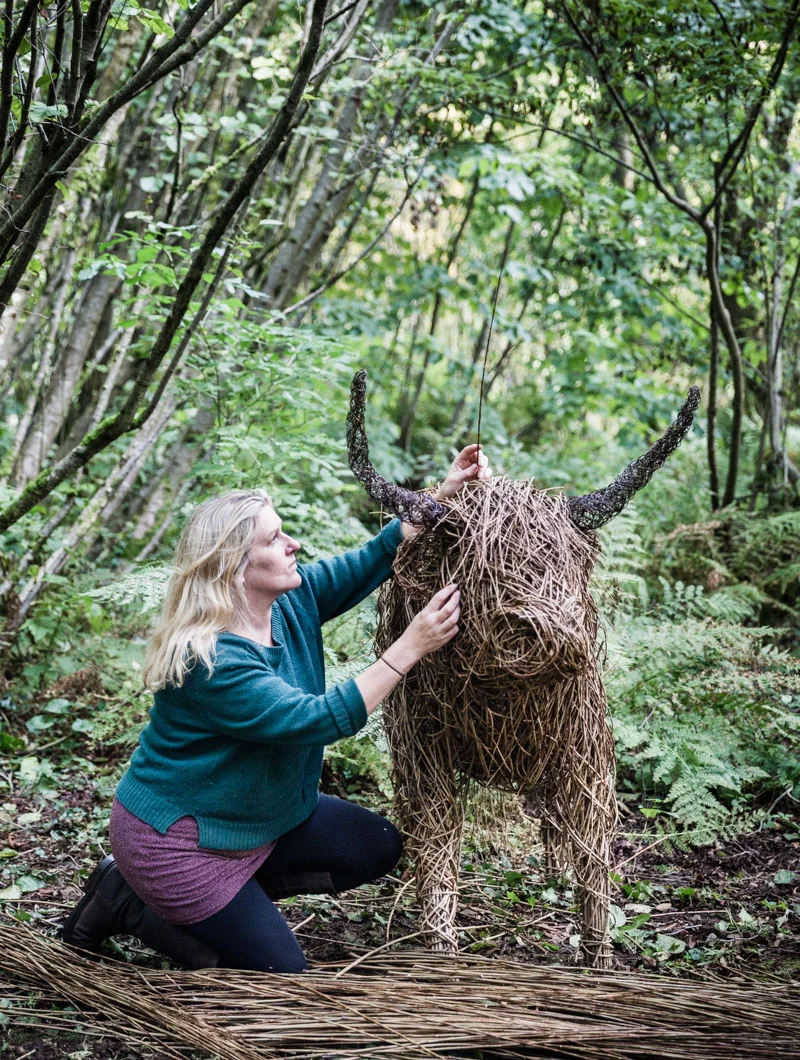
Katherine Miles / Willow Weaver / Chagford
Famed throughout the South West for her life-sized willow animal sculptures, Katherine's work is displayed in stately homes, private gardens and as interior design pieces. Katherine's studio is a sight in itself. Nestled in an arboretum in Chagford's Stone Lane Gardens, it's crammed with sculptures of beasts, including highland cows, pigs, horses, deer, donkeys, sheep, goats, hares, owls, llamas, foxes, swans and birds of prey. Katherine welcomes visitors and offers short weaving courses.
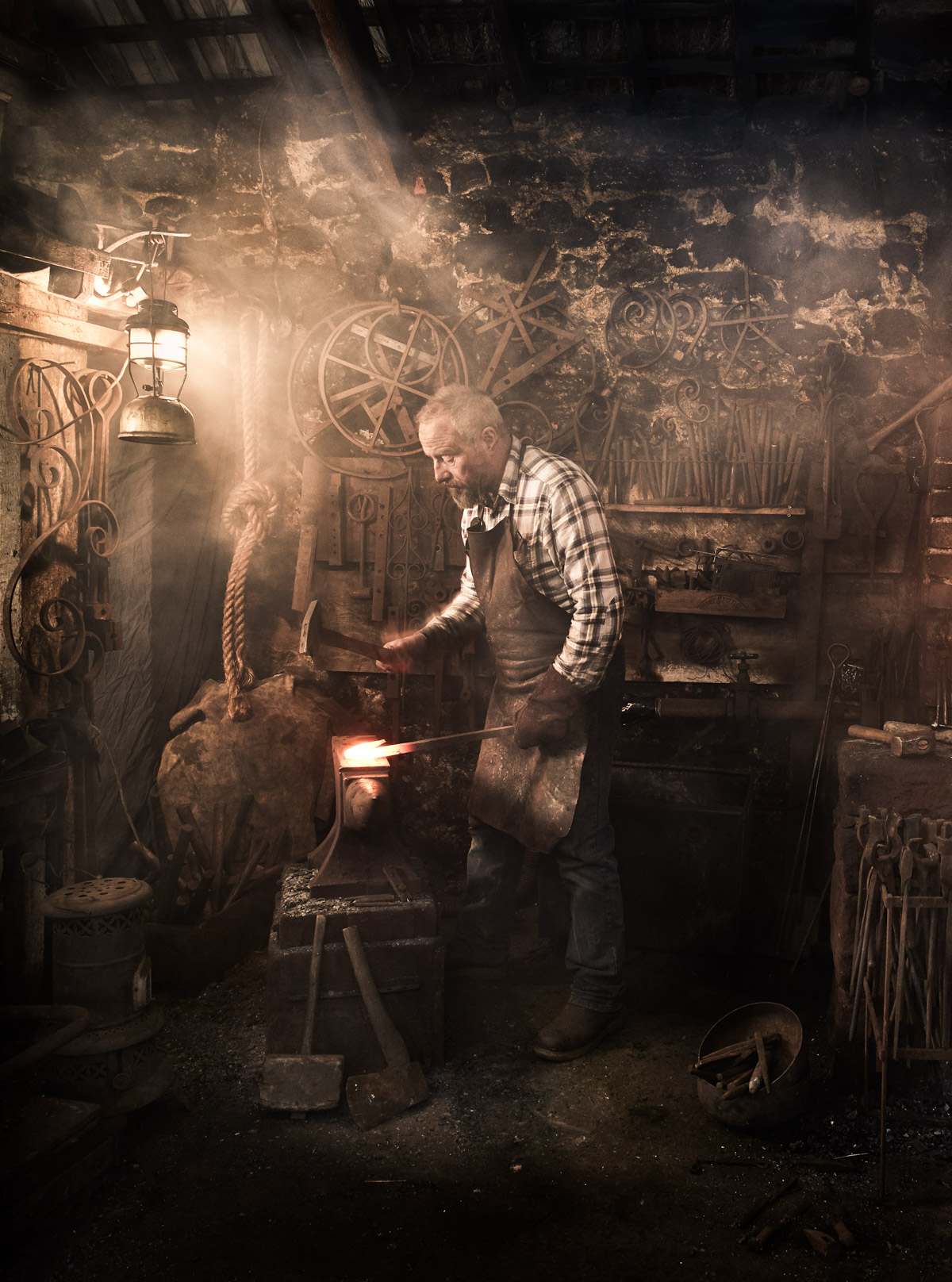
Greg Abel / Blacksmith / Moretonhampstead
One of just a handful of blacksmiths left on Dartmoor, Greg Abel works in a 150-year-old stone forge, where vintage farm and farriers’ tools, made by previous smithies, still hang from the rafters. Greg uses traditional coal in the original hearth rather than gas, which is now more commonly used, with hammer and anvil still his main tools. You can drop in to see Greg at work, or book in for a course and learn how to make a fire poker, toasting fork, letter opener, coat hook or barbecue butler
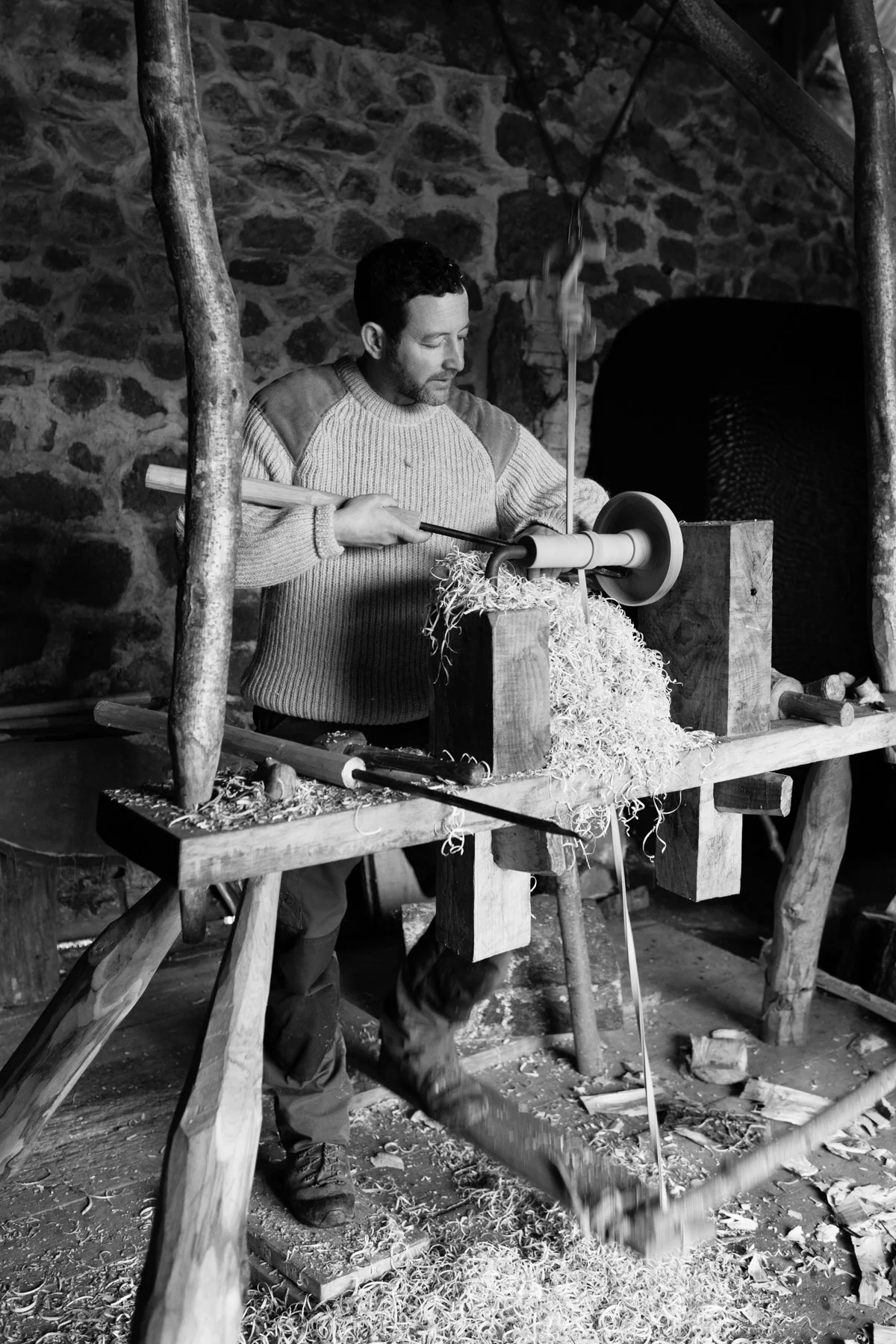
Sharif Adams / Wood Turner / North Bovey
Specialising in ancient woodturning techniques, some of which date from the Iron Age, Sharif uses a traditional pole lathe powered by a treadle to turn bowls, pots, cups, flasks and boxes, sourcing wood from sustainable Dartmoor forests. Sharif works in beautiful stone threshing barn on a working farm near North Bovey. During Sharif's demonstration, you will see him practise this age-old skill to craft a wooden bowl. Using a pole lathe requires a moderate amount of physical energy but it is great fun and can be a real challenge. No previous woodturning experience is required

Yuli Somme / Felt Maker / Moretonhampstead
Yuli is the UK’s only remaining maker of burial shrouds, a funereal tradition dating from the 17th century, when law decreed that the dead must be buried in wool. Yuli also makes felt urns for cremated remains, hot-water bottle covers, tea cosies, pillows, seat pads and hats, which she sells in her Moretonhampstead studio, which doubles as a Unitarian chapel. During her workshops, Yuli will give you a tour of her beautiful studio, pictured, and you'll have the chance to produce your own piece of felt.

Alison Hastie, Green Shoes, Moretonhampstead
With her company, Green Shoes, listed as one of world’s most ethical shoemakers, Alison Hastie and her small team hand-makes footwear to order, using full-grain leathers and vegan alternatives. Her workshop is in a beautiful chapel in the artisan town of Moretonhampstead. You'll be treated to a personal guided tour of her workshop, where Alison will show you how she hand makes her shoes from scratch.
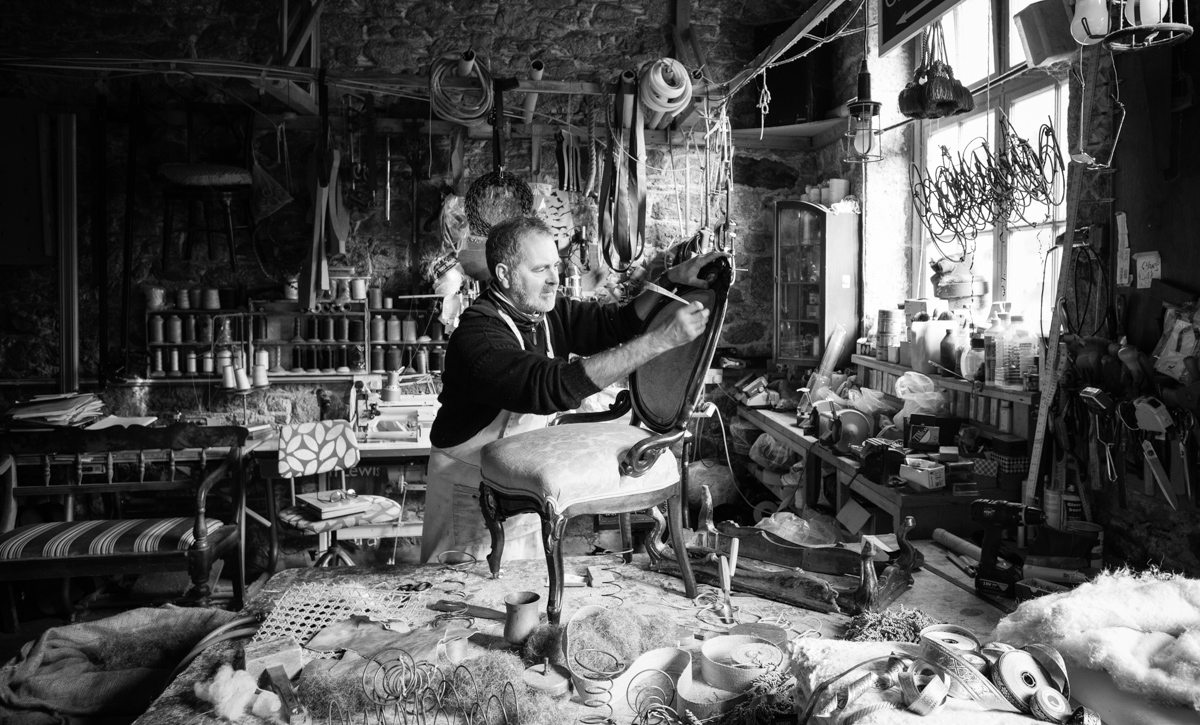
Stuart Coote / Upholsterer / Chagford
Follow the sounds of chamber music that waft around the backstreets of Chagford and you'll be led to the Georgian coachhouse where Stuart devotes himself to upholstering antique and modern furniture the traditional way. His is a wonderfully riotous workshop, where walls are hung with half-broken chairs, furniture springs and enormous rolls of webbing, and floors are scattered with off-cuts of damasks and fine silks, piles of lambswool and hessian bags overflowing with horse hair and shredded coconut husks. Stuart welcomes visitors, but it’s best to check he’s in by calling first.
Ambrose Vevers / Wood Worker / Ashburton
One of Dartmoor’s up-and-coming craftsmen, Ambrose hand-makes contemporary furniture using traditional techniques such as steam bending. He sources his wood from coppicing and careful woodland management. Ambrose offers three-hour courses where you’ll learn to make your own coat hook or beautiful elm chopping board.

Miriam Boy / Jeweller / Chagford
Working from a cosy studio in the centre of the ancient stannary town of Chagford, Miriam makes silver jewellery using designs inspired by the moors and wildlife that surrounds her. Miriam is one of the few people in the UK to offer lovebirds the chance to design and make their own wedding rings

Ron produces up to 1500 gallons of cider using one of the UK's oldest working cider presses, in a barn that dates back to Saxon times. Ron offers one-hour tours, showing you around these characterful historic buildings and explain how cider is produced using his traditional press, pictured above. There will be a chance to look around the orchards, where old and rare apple varieties still grow, including the wonderfully-titled Fair Maids of Devon, Pigs’ Snout and Slack-ma-Girdle. There'll also be a chance to taste his cider, but beware - it’s strong!

A rising star of Dartmoor’s arts scene, Sophie paints impressionist landscapes of the north moors, with Skaigh Woods a favourite spot. Sophie runs regular ‘art walks’ - group painting sessions in the outdoors – in the Belstone area.

Martin Brady / Leather Worker / Chagford
Martin has a hands-on approach to his craft, visiting tanneries to select the perfect hides. Here, is pictured sampling skins at J&FJ Baker & Co, the UK’s last remaining oak-bark tannery, in Colyton, East Devon. Martin hand-stitches his products, which include belts, handbags and dog collars, at his shop in Chagford, in full view of his customers. Martin offers short workshop, where you’ll have the chance to produce your own bookmark or key fob

Mary Gillett / Printmaker / Tavistock
Inspired by Dartmoor’s atmospheric landscapes, Mary etches scenes of its valleys, woodlands and open moors onto metal plates, then passes them through her vintage printing press, pictured. Mary's workshops are suitable for everyone from complete beginners to experienced printmakers
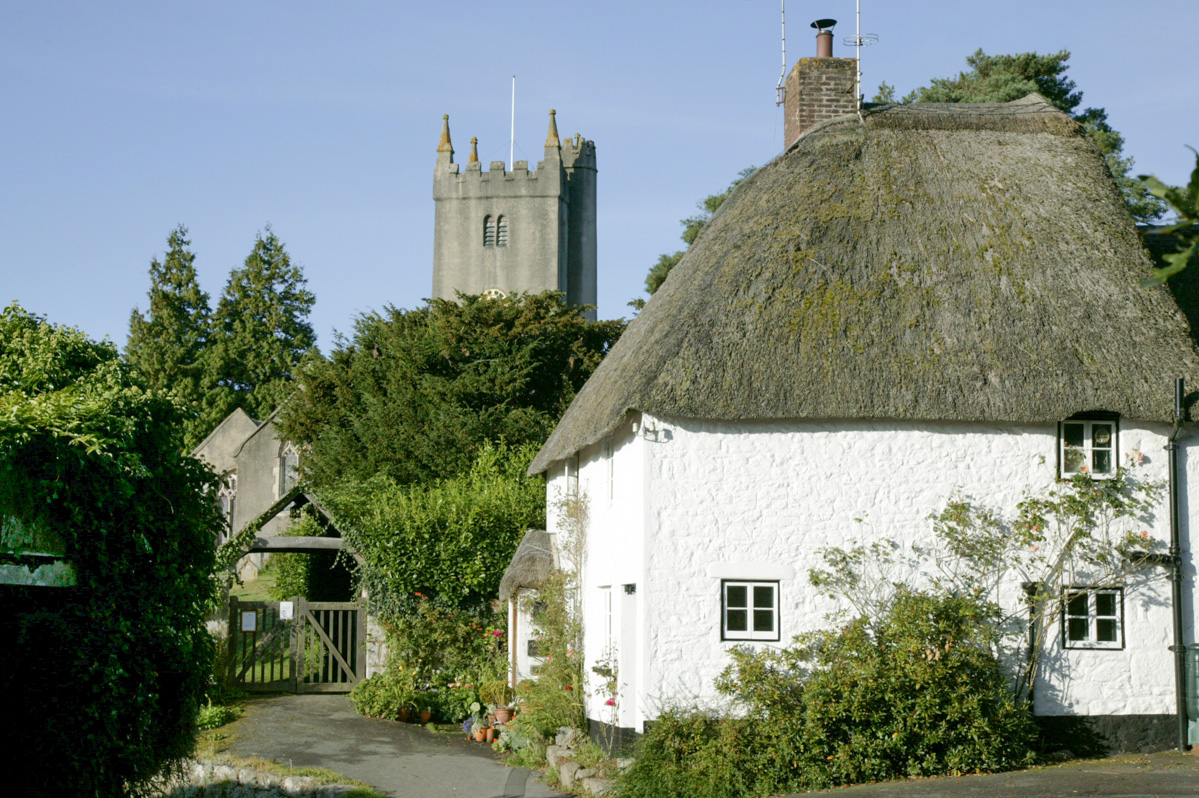
MOORLAND VIEW COTTAGE
This stunning Dartmoor holiday cottage is right on the Dartmoor Artisan Trail and displays the work of several artisans.
ON OUR BLOG
-
Active
- Feb 15, 2020 Dartmoor's Top 10 Walks
- Mar 24, 2019 Devon's Best Swimming Spots
- Mar 11, 2019 Devon's Best Activities
- Feb 6, 2019 Dartmoor's Best Photo Locations
- Feb 3, 2019 12 Dartmoor Artisans To Visit
-
Art & Culture
- Oct 8, 2025 A Scenic Dartmoor Road Trip
- Feb 15, 2020 Must-See Dartmoor Attractions
- Mar 11, 2019 Best Guided Tours
- Mar 11, 2019 Divine Devon Towns and Villages
- Mar 11, 2019 Best Attractions in Devon
- Mar 1, 2019 My Devon: A Tour Guide's Top Spots
- Feb 23, 2019 Map of Devon's Best Attractions
- Feb 3, 2019 12 Dartmoor Artisans To Visit
- Jan 31, 2019 Dartmoor's Best Prehistoric Sites
- Jan 11, 2019 The Ultimate South-West Road Trip
-
Dartmoor
- Oct 8, 2025 A Scenic Dartmoor Road Trip
- Feb 22, 2020 Stunning Dartmoor Photographs
- Feb 15, 2020 Must-See Dartmoor Attractions
- Feb 15, 2020 Things To Do On Our Doorstep
- Feb 15, 2020 Dartmoor's Top 10 Walks
- Mar 24, 2019 Town Guide: Bovey Tracey
- Mar 24, 2019 Town Guide: Moretonhampstead
- Mar 24, 2019 Town Guide: Ashburton
- Mar 24, 2019 Town Guide: Chagford
- Mar 11, 2019 A Complete Guide To Dartmoor
- Mar 11, 2019 Devon's Best Activities
- Mar 11, 2019 Best Guided Tours
- Mar 11, 2019 Dartmoor's Best Cream Teas
- Feb 6, 2019 Dartmoor's Best Photo Locations
- Feb 3, 2019 12 Dartmoor Artisans To Visit
- Jan 31, 2019 Dartmoor's Best Prehistoric Sites
-
Day Trips
- Mar 10, 2019 Day Trip: Totnes
- Mar 10, 2019 Day Trip: Salcombe
- Mar 9, 2019 Day Trip: Exeter
- Feb 3, 2019 Day Trip: Cornwall
- Feb 2, 2019 Day Trip: Dartmouth
- Feb 1, 2019 Day Trip: North Devon
-
Food & Drink
- Sep 11, 2025 Best Devon Brunches
- Jul 10, 2025 Devon's Perfect Pubs
- Apr 10, 2025 Best Restaurants in Devon
- Mar 24, 2019 Devon's Best Outdoor Eating
- Mar 12, 2019 Devon's Best Cafes
- Mar 11, 2019 Dartmoor's Best Cream Teas
- Mar 10, 2019 A Foodie's Guide to Devon
- Mar 9, 2019 Best Experiences For Foodies
- Mar 9, 2019 Fine Dining With Our Private Chef
- Mar 9, 2019 Devon's Best Fine Dining Restaurants
-
Highlights
- Feb 22, 2020 Stunning Dartmoor Photographs
- Feb 15, 2020 Must-See Dartmoor Attractions
- Feb 15, 2020 Things To Do On Our Doorstep
- Jun 8, 2019 20 Ultimate Devon Holiday Ideas
- Mar 24, 2019 Devon's Best Swimming Spots
- Mar 24, 2019 Summer Holiday Ideas For Devon
-
Honeymoons
- Jan 5, 2026 10 Romantic Things to Do in Devon for a Dreamy UK Honeymoon
- Feb 3, 2019 8 Reasons To Honeymoon With Us
- Feb 1, 2019 Eight Ideas For A Devon Mini-Moon
-
Interior Design
- Mar 12, 2019 Devon's Best Interiors Shops
- Jan 20, 2019 Like Our Style? Get The Look, Part II
- Jan 12, 2019 Like Our Style? Get The Look, Part I
-
Luxury
- Mar 9, 2019 Fine Dining With Our Private Chef
- Mar 9, 2019 Guide: Luxury Cottage Breaks in Devon
-
Map
- Feb 23, 2019 Map of Devon's Best Attractions
-
Road Trips
- Oct 8, 2025 A Scenic Dartmoor Road Trip
- Jan 11, 2019 The Ultimate South-West Road Trip
-
Romance
- Jan 13, 2026 Romantic Breaks in Devon: Where to Stay, What to Do and How to Avoid the Crowds
- Jan 5, 2026 10 Romantic Things to Do in Devon for a Dreamy UK Honeymoon
- Nov 30, 2025 10 Reasons to Book a Romantic Winter Break on Dartmoor
- Mar 24, 2019 Devon Marriage Proposal Locations
- Mar 9, 2019 Guide: Luxury Cottage Breaks in Devon
- Mar 9, 2019 Devon's Best Fine Dining Restaurants
- Feb 3, 2019 8 Reasons To Honeymoon With Us
- Feb 1, 2019 Eight Ideas For A Devon Mini-Moon
-
Shopping
- Mar 24, 2019 Town Guide: Moretonhampstead
- Mar 24, 2019 Town Guide: Ashburton
- Mar 24, 2019 Town Guide: Chagford
- Mar 12, 2019 Devon's Best Interiors Shops
- Mar 11, 2019 Devon's Best Towns For Shopping
- Mar 10, 2019 A Foodie's Guide to Devon
- Mar 10, 2019 Day Trip: Totnes
- Mar 9, 2019 Day Trip: Exeter
-
Summer
- Mar 24, 2019 Devon's Best Outdoor Eating
- Mar 24, 2019 Devon's Best Swimming Spots
- Mar 24, 2019 Summer Holiday Ideas For Devon
- Mar 11, 2019 Devon's Most Beautiful Beaches
- Mar 11, 2019 Devon's Best Public Gardens
- Mar 10, 2019 Day Trip: Salcombe
- Feb 3, 2019 Day Trip: Cornwall
- Feb 2, 2019 Day Trip: Dartmouth
-
Swimming
- Mar 24, 2019 Devon's Best Swimming Spots
- Mar 11, 2019 Devon's Most Beautiful Beaches
-
Town Guides
- Mar 24, 2019 Town Guide: Bovey Tracey
- Mar 24, 2019 Town Guide: Moretonhampstead
- Mar 24, 2019 Town Guide: Ashburton
- Mar 24, 2019 Town Guide: Chagford
- Mar 11, 2019 Divine Devon Towns and Villages
- Mar 11, 2019 Devon's Best Towns For Shopping
- Mar 10, 2019 Day Trip: Totnes
- Mar 10, 2019 Day Trip: Salcombe
- Feb 2, 2019 Day Trip: Dartmouth
-
Winter Breaks
- Jan 8, 2026 Dartmoor's Best Autumn Walk
- Nov 30, 2025 10 Reasons to Book a Romantic Winter Break on Dartmoor
- Jul 10, 2025 Devon's Perfect Pubs
- Mar 12, 2019 Devon's Best Interiors Shops
- Mar 11, 2019 Dartmoor's Best Cream Teas
- Feb 3, 2019 20 Things to Do on Dartmoor This Winter
Dartmoor's Best Prehistoric Sites
Dartmoor has more Bronze Age remains than anywhere else in Britain. We highlight the moor’s most notable archaeological sites..
Dartmoor has the highest concentration of Bronze Age remains in Britain. Here’s our guide to the moor’s most notable archaeological sites, including standing stones, hut circles, burial chambers and stone rows.

Merrivale Stone Row
You can’t go far in Dartmoor National Park without seeing traces of the prehistoric people who came before us, and left evidence of their lives in the form of stone circles, graves, hut circles and cists: stone-built boxes used to house the bones of the dead. These remnants, fascinating in themselves, chime perfectly with the elemental mysticism of Dartmoor, which has long provided artists and writers with inspiration.
The area has the highest concentration of Bronze Age remains in Britain, as well as many Neolithic traces. The climate would have been warmer and more hospitable than it is now, and the current bare expanses of moorland would have been cloaked in trees: indeed it was the Neolithic settlers who began to clear the land for cultivation.
The most dramatic – and mysterious – structures left by these early settlers are the standing stones or menhirs, referred to locally as long stones. There are arranged in circles or rows, whose function is the source of endless speculation. There are fine examples at Upper Erme, Drizzlecombe, Laughter Tor and Merrivale.
Less dramatic but perhaps even more evocative are the hut circles, of which there may be as many as 5000 on the moor. These are the ruins of ancient homes, some of which feature stone porches; it’s thought that their conical roofs would have been timbered and thatched. Bronze Age Grimspound is the most famous example, where both the hut foundations and an enclosing wall survive, backed by rugged moorland.
Grimspound
Dating back around 3000 years to the late Bronze Age, this extensive moorland site comprises the ruins of 24 roundhouses, as well as a 150 metre-long, three-metre thick encircling wall, though to have been used as barrier to keep wild animals out and farmed animals in. One of the key ancient sites of Dartmoor, excavations revealed porches, paved floors, hearths, raised benches, cooking holes, charcoal, pottery and flint scraping tools. The imposing entrance is flanked by high walls, with a passage 1.8 metres wide which is roughly paved. A stream running through the northern half of the enclosure would have provided fresh water, and explains the settlement’s exposed position. The walls of the houses within the enclosure were probably not much higher than they are now, and covered with conical roofs of turf or thatch. A number of low rubble banks against the internal face of the enclosure wall probably formed sheep or cattle pens. Immediately south-east of the enclosure the remains of at least nine more houses survive, all linked to rubble banks forming part of a field system.
Childe's Tomb
Sitting on open moorland, this reconstructed granite tomb topped by a rugged cross is said to honour a Saxon hunter called Childe, who died here during a storm having disemboweled his horse and climbed inside it for warmth. The scattered stones of the vandalized tomb were reassembled in the 1880s.
Scorhill stone circle
Scorhill comprises a Bronze Age circle of tall granite stones, 23 standing and 11 which have hit the moorland over the centuries. The tallest of the stones frames the sunset at midsummer, suggesting it may have been an astral timepiece.
Staldon stone row
The longest stone row on Dartmoor, with the rugged rocks leading walkers for 500m up the steady rise of Stalldown Hill, and ascending in height till they reach 2.5 metres. Statistics aside, this is one of the most mystical and enigmatic sites on the moor.
Sousans stone circle
These twenty-two low stones making a neat circle are thought to be the remnants of a cairn, or burial mound. A cist (stone chamber) sits at the centre of the circle.

Nine Maidens
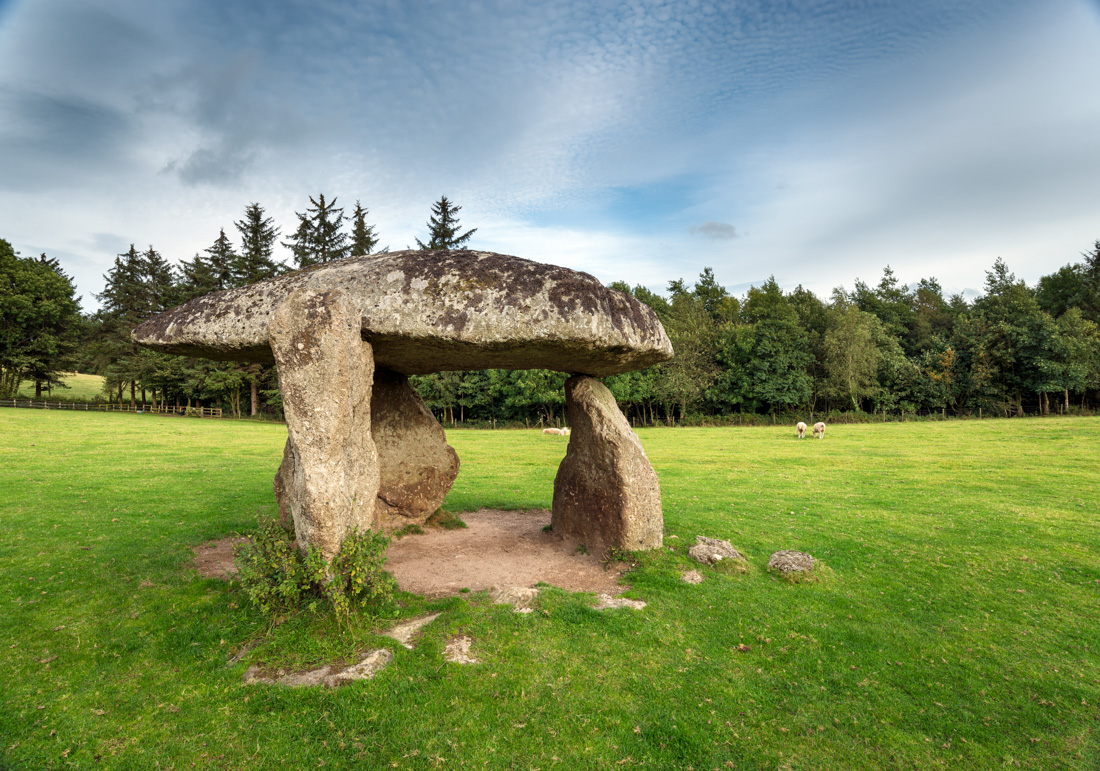
Spinster’s Rock
Merrivale stone rows
These parallel lines of stones embedded in the soil are one of the many mysteries of Dartmoor: the function of the rocky corridor is unknown.
Nine Maidens
The Nine Maidens, also known as the Seventeen Brothers, is a Bronze Age stone circle located near the Dartmoor village of Belstone. The stone circle functioned as a burial chamber, although the cairn has since been robbed and the cist - burial chamber - destroyed. The Nine Maidens is an incomplete stone circle with sixteen still standing. The stones are said to have originally been nine maidens who were cast into stone and damned to dancing every noon for eternity as a punishment for dancing on the Sabbath, but the story has also involved seventeen brothers. It is also said that the ringing of the nearby church bells brings them to life.
Spinster’s Rock
The best surviving example in Devon of a neolithic burial chamber (known as a dolmen or cromlechIn) , erected around 3500-2500 BC. The chamber probably contained many bodies and would originally have been covered by a long earthen mound. The name derives from folklore that it was erected by three spinsters before breakfast.

Scorhill
Hound Tor deserted village
The most easily accessible medieval village on the moor, the remains sit at the bottom of Hound Tor. It has four Dartmoor longhouses, many with a central drainage channel, and several smaller houses and barns dating from the 13th century. The settlement consists of a cluster of 13th century stone longhouses – in which the family lived at one end and the animals at the other – on land that was originally farmed in the Bronze Age. Pollen evidence indicates that farming had stopped by 1350, but recent analysis of pottery suggests that the village was probably occupied until the late 14th or early 15th century. Hound Tor was probably deserted in the early 15th century. Look out for the oven, tucked in among the grass. From the top of Greator Rocks, there is a fine view over the abandoned village and the surrounding moors.
RELATED ARTICLES


Landscape photographer and social media sensation Will Lamerton reveals Dartmoor’s most Instagrammable destinations.